Buy jobclick.eu ?
We are moving the project
jobclick.eu .
Are you interested in purchasing the domain
jobclick.eu ?
domain@kv-gmbh.de · 0541-91531010
Buy jobclick.eu ?
What is the implication?
The implication refers to the conclusion or suggestion that can be drawn from a particular situation or piece of information. It is the logical consequence or significance of something that has been said or done. Understanding the implication is important as it helps us grasp the deeper meaning or potential outcomes of a given scenario. It allows us to make informed decisions and anticipate the possible effects of our actions. **
Are implication and conjunction the same?
No, implication and conjunction are not the same. Implication, represented by the symbol "→", is a logical operation that represents "if-then" statements. It states that if the antecedent is true, then the consequent must also be true. On the other hand, conjunction, represented by the symbol "∧", is a logical operation that represents "and" statements. It states that both the statements connected by the conjunction must be true for the entire statement to be true. In summary, implication deals with conditional relationships, while conjunction deals with the combination of multiple true statements. **
Similar search terms for Implication
Top-Angebote
Products related to Implication:
-
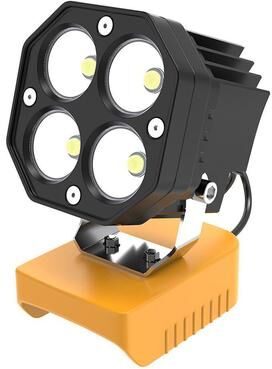
Inspired Deals Battery Compatible Portable LED Work Light, 6000LM High Output 18V 20V Job Site Lighting Yellow Battery Compatible Portable LED Work Light, 6000LM High Output 18V 20V Job Site Lighting YellowStep out of the shadows and light up every task with our rugged portable cordless LED work light that transforms how you work and play. Designed for professionals, DIYers, and outdoor adventurers alike, this light delivers up to 6000LM of bright...59,97 $*Shipping: 0,00 $Secure redirect to the provider
-
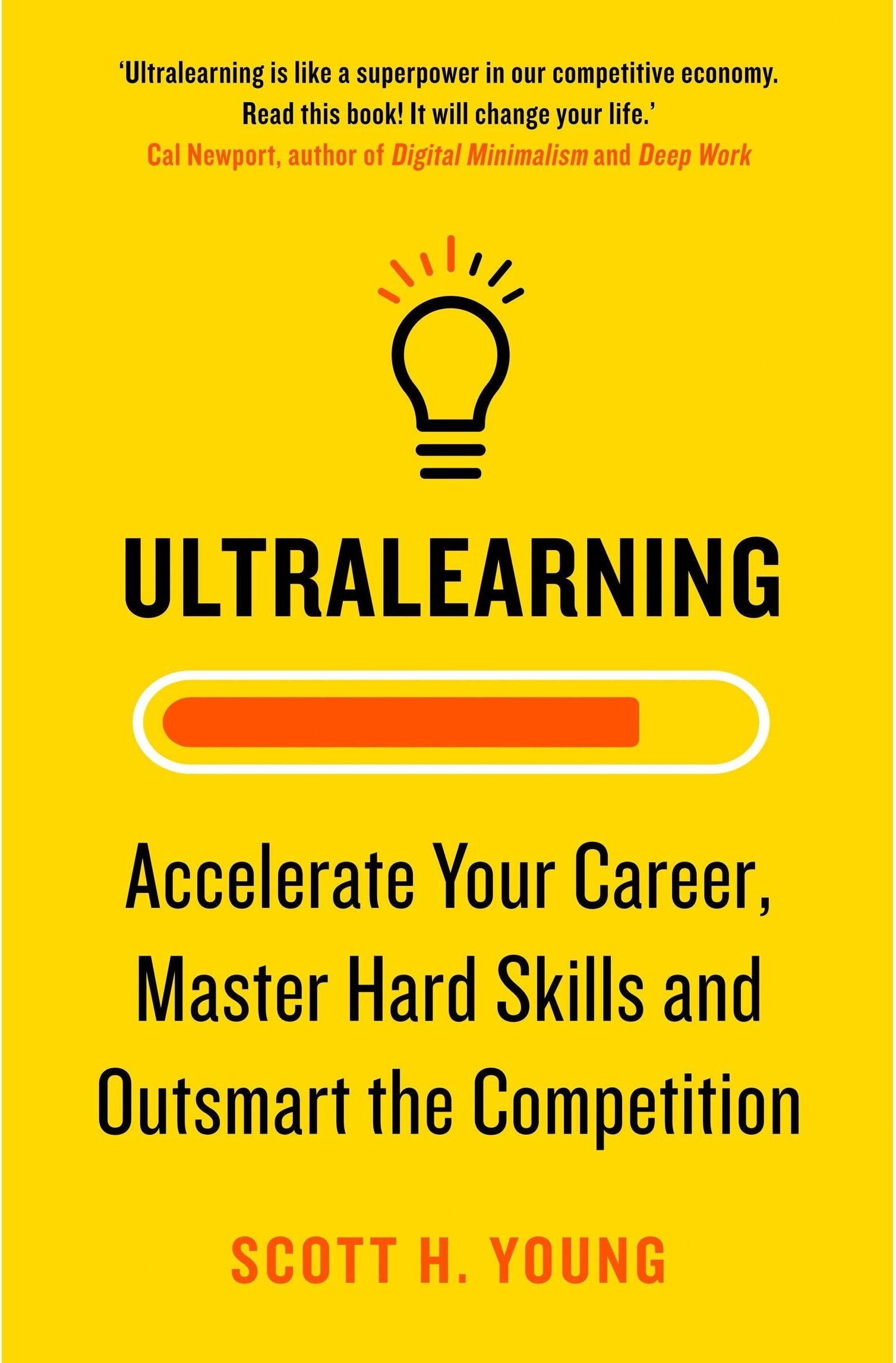
Thorsons Ultralearning: Accelerate Your Career, Master Hard Skills and Outsmart the CompetitionFuture-proof your career and maximize your competitive advantage by learning the skill necessary to stay relevant, reinvent yourself, and adapt to whatever the workplace throws your way in this essential guide. Faced with tumultuous economic times and rapid technological change, staying ahead in your career depends on continual learning―a lifelong mastery of new ideas, subjects, and skills. If you want to accomplish more and stand apart from everyone else, you need to become an ultralearner. Scott Young incorporates the latest research about the most effective learning methods and the stories of other ultralearners like himself―among them Ben Franklin, Judit Polgar, and Richard Feynman, as well as a host of others, such as little-known modern polymaths like Nigel Richards who won the World Championship of French Scrabble―without knowing French. Young documents the methods he and others have used and shows that, far from being an obscure skill limited to aggressive autodidacts, ultralearning is a powerful tool anyone can use to improve their career, studies, and life. Ultralearning explores this fascinating subculture, shares the nine principles behind every successful ultralearning project, and offers insights into how you can organize and execute a plan to learn anything deeply and quickly, without teachers or budget-busting tuition costs. Whether the goal is to be fluent in a language (or ten languages), earn the equivalent of a college degree in a fraction of the time, or master multiple skills to build a product or business from the ground up, the principles in Ultralearning will guide you to success.8,99 £*Shipping: 2,99 £Secure redirect to the provider
-
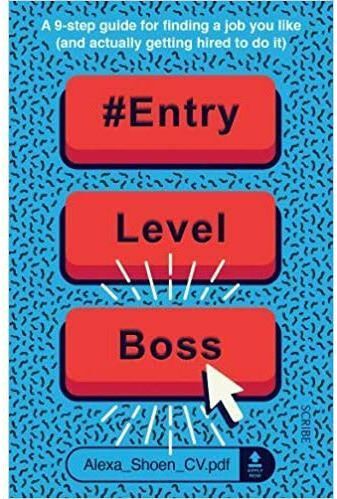
Scribe UK Find a Job - #ENTRYLEVELBOSS - a 9-step guide for finding a job you likeFind a Job - Banging your head against the wall with the job search? #ENTRYLEVELBOSS will help you stop freaking out. Miserable in your current role but no idea what to do next? With this book you'll be able to make a decision, no personality tests required. Convinced that you are the most unhireable person on this planet? That's statistically improbable - and you'll be amazed at how employable you'll be by the time you have finished reading. This is personal training for your career, based on a step-by-step plan that includes: All the intel you need about getting hired in today's world, in today's industries, and with today's tools. Hyper-specific advice including templates for networking emails, CVs, and cover letters. Straight-to-the-point guidance about what not to do. A solid dose of humour and emotional support from someone who really has been there. The world of work has changed, and getting hired today for a job you actually want is going to take a lot more than a neatly typed cover letter and a well-pressed suit. But along with all the challenges of the new economy come unprecedented opportunities, and careers expert Alexa Shoen is here to unlock them for you.4,99 £*Shipping: 1,99 £Secure redirect to the provider
-
Wrendale Designs 'Sleeping on the Job' ChalkboardThe Wrendale Designs Sleeping on the Job Chalkboard is perfect for jotting down lists, notes or meal plans. Its charming border collie and rabbit design adds a playful touch, making it ideal for the kitchen or any space in your home. Featuring an easy-to-hang rope hanger and a ledge to keep a piece of chalk handy, this chalkboard combines functionality with style. Dimensions: 50 x 25cm.19,80 £*Shipping: 3,50 £Secure redirect to the provider

-
How do I prove the following implication?
To prove an implication, you typically assume the antecedent (the statement that comes before the "if" in the implication) is true and then show that the consequent (the statement that comes after the "then" in the implication) must also be true. This can be done through direct proof, contrapositive proof, proof by contradiction, or proof by cases, depending on the specific implication and the context in which it is being proven. It is important to carefully follow the logical steps and rules of inference to ensure a valid proof. **
-
How can I best remember the implication?
To best remember the implication, you can try creating associations or connections between the information you want to remember and something familiar to you. This could be through visualization, creating mnemonic devices, or using repetition to reinforce the concept in your memory. Additionally, practicing active recall by testing yourself on the implication and explaining it in your own words can help solidify your understanding and retention of the information. Lastly, teaching the concept to someone else can also be an effective way to remember the implication as it requires you to articulate and reinforce your understanding of the topic. **
-
Does an implication apply to both sides?
Yes, an implication applies to both sides. In an implication statement "if A then B," A is the antecedent and B is the consequent. This means that if A is true, then B must also be true. However, if A is false, then the statement is still considered true, as there is no requirement for B to be true in that case. Therefore, an implication applies to both sides, but the truth value of the antecedent does not necessarily determine the truth value of the consequent. **
-
What is the difference between allusion and implication?
An allusion is a reference to a person, place, event, or literary work that the author expects the reader to recognize and understand. It is a direct or indirect reference to something outside of the text. On the other hand, an implication is a suggestion or hint that is not explicitly stated in the text but can be inferred by the reader. It is the conclusion or meaning that the reader draws from the text based on the information provided. In summary, an allusion is a direct reference, while an implication is a subtle suggestion or inference. **

Can a permit also be granted by implication?
Yes, a permit can also be granted by implication. This means that even if a permit is not explicitly stated or written down, it can still be inferred or implied based on the actions or conduct of the parties involved. For example, if a property owner consistently allows a certain activity to take place on their property without objection, it can be implied that they have granted a permit for that activity. Implied permits are often based on the principle of estoppel, where a party is prevented from denying something due to their previous actions or representations. **
What do I not understand about disjunction and implication?
It seems like you may not fully understand the difference between disjunction and implication in logic. Disjunction, represented by the symbol "∨", is a logical operation that represents "or" - it is true if at least one of the statements is true. Implication, represented by the symbol "→", is a logical operation that represents "if...then" - it is false only when the antecedent is true and the consequent is false. Understanding the nuances of how these logical operations work and how they are used in different contexts can help clarify any confusion you may have. **
Top-Angebote
Products related to Implication:
-
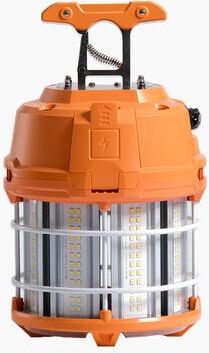
All Categories Goods LED Temporary Work Light Linkable Construction Job Site Lamp LED Temporary Work Light Linkable Construction Job Site LampLight up demanding spaces with a LED temporary work light built to keep every task clear, safe, and visible. This 60W hanging lamp is made for contractors, remodelers, workshop owners, and anyone who needs dependable temporary illumination. With...132,97 $*Shipping: 0,00 $Secure redirect to the provider
-
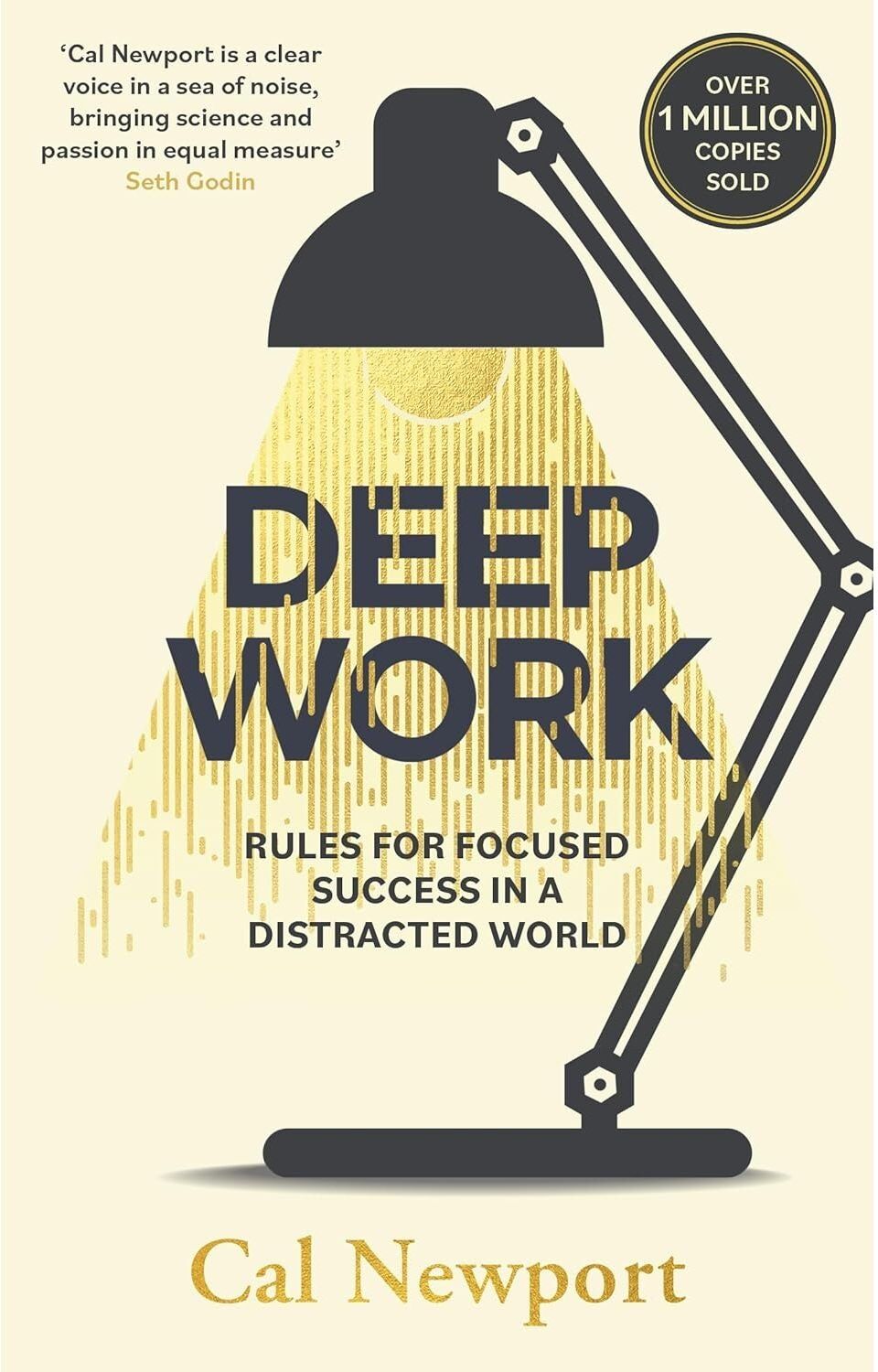
Piatkus Deep Work – Rules for Focused Success in a Distracted World by Cal Newport Productivity, Focus & Career Success BookIn a world full of distractions, the ability to focus deeply is becoming increasingly rare—and increasingly valuable. In Deep Work: Rules for Focused Success in a Distracted World, bestselling author and productivity expert Cal Newport explains why deep, concentrated work is the key to mastering complex skills, producing high-quality results, and standing out in your career. Drawing on neuroscience, psychology, and real-world examples, Newport shows how to eliminate distractions, train your focus, and work with intense concentration. The book combines compelling theory with practical strategies, helping readers build habits that support sustained attention and meaningful productivity in both professional and personal life. What You’ll Learn: Why deep work is essential for success in the modern economy How shallow work undermines productivity and focus Practical rules for building deep work habits Techniques to minimize distractions and digital overload How to produce better results in less time Perfect for professionals, students, creatives, and entrepreneurs, Deep Work is a must-read guide to achieving focus, efficiency, and long-term career success.7,99 £*Shipping: 2,99 £Secure redirect to the provider
-
Inspired Deals Battery Compatible Portable LED Work Light, 6000LM High Output 18V 20V Job Site Lighting Yellow Battery Compatible Portable LED Work Light, 6000LM High Output 18V 20V Job Site Lighting YellowStep out of the shadows and light up every task with our rugged portable cordless LED work light that transforms how you work and play. Designed for professionals, DIYers, and outdoor adventurers alike, this light delivers up to 6000LM of bright...59,97 $*Shipping: 0,00 $Secure redirect to the provider
-
Thorsons Ultralearning: Accelerate Your Career, Master Hard Skills and Outsmart the CompetitionFuture-proof your career and maximize your competitive advantage by learning the skill necessary to stay relevant, reinvent yourself, and adapt to whatever the workplace throws your way in this essential guide. Faced with tumultuous economic times and rapid technological change, staying ahead in your career depends on continual learning―a lifelong mastery of new ideas, subjects, and skills. If you want to accomplish more and stand apart from everyone else, you need to become an ultralearner. Scott Young incorporates the latest research about the most effective learning methods and the stories of other ultralearners like himself―among them Ben Franklin, Judit Polgar, and Richard Feynman, as well as a host of others, such as little-known modern polymaths like Nigel Richards who won the World Championship of French Scrabble―without knowing French. Young documents the methods he and others have used and shows that, far from being an obscure skill limited to aggressive autodidacts, ultralearning is a powerful tool anyone can use to improve their career, studies, and life. Ultralearning explores this fascinating subculture, shares the nine principles behind every successful ultralearning project, and offers insights into how you can organize and execute a plan to learn anything deeply and quickly, without teachers or budget-busting tuition costs. Whether the goal is to be fluent in a language (or ten languages), earn the equivalent of a college degree in a fraction of the time, or master multiple skills to build a product or business from the ground up, the principles in Ultralearning will guide you to success.8,99 £*Shipping: 2,99 £Secure redirect to the provider
-
What is the implication?
The implication refers to the conclusion or suggestion that can be drawn from a particular situation or piece of information. It is the logical consequence or significance of something that has been said or done. Understanding the implication is important as it helps us grasp the deeper meaning or potential outcomes of a given scenario. It allows us to make informed decisions and anticipate the possible effects of our actions. **
-
Are implication and conjunction the same?
No, implication and conjunction are not the same. Implication, represented by the symbol "→", is a logical operation that represents "if-then" statements. It states that if the antecedent is true, then the consequent must also be true. On the other hand, conjunction, represented by the symbol "∧", is a logical operation that represents "and" statements. It states that both the statements connected by the conjunction must be true for the entire statement to be true. In summary, implication deals with conditional relationships, while conjunction deals with the combination of multiple true statements. **
-
How do I prove the following implication?
To prove an implication, you typically assume the antecedent (the statement that comes before the "if" in the implication) is true and then show that the consequent (the statement that comes after the "then" in the implication) must also be true. This can be done through direct proof, contrapositive proof, proof by contradiction, or proof by cases, depending on the specific implication and the context in which it is being proven. It is important to carefully follow the logical steps and rules of inference to ensure a valid proof. **
-
How can I best remember the implication?
To best remember the implication, you can try creating associations or connections between the information you want to remember and something familiar to you. This could be through visualization, creating mnemonic devices, or using repetition to reinforce the concept in your memory. Additionally, practicing active recall by testing yourself on the implication and explaining it in your own words can help solidify your understanding and retention of the information. Lastly, teaching the concept to someone else can also be an effective way to remember the implication as it requires you to articulate and reinforce your understanding of the topic. **
Similar search terms for Implication
-
Scribe UK Find a Job - #ENTRYLEVELBOSS - a 9-step guide for finding a job you likeFind a Job - Banging your head against the wall with the job search? #ENTRYLEVELBOSS will help you stop freaking out. Miserable in your current role but no idea what to do next? With this book you'll be able to make a decision, no personality tests required. Convinced that you are the most unhireable person on this planet? That's statistically improbable - and you'll be amazed at how employable you'll be by the time you have finished reading. This is personal training for your career, based on a step-by-step plan that includes: All the intel you need about getting hired in today's world, in today's industries, and with today's tools. Hyper-specific advice including templates for networking emails, CVs, and cover letters. Straight-to-the-point guidance about what not to do. A solid dose of humour and emotional support from someone who really has been there. The world of work has changed, and getting hired today for a job you actually want is going to take a lot more than a neatly typed cover letter and a well-pressed suit. But along with all the challenges of the new economy come unprecedented opportunities, and careers expert Alexa Shoen is here to unlock them for you.4,99 £*Shipping: 1,99 £Secure redirect to the provider
-
Wrendale Designs 'Sleeping on the Job' ChalkboardThe Wrendale Designs Sleeping on the Job Chalkboard is perfect for jotting down lists, notes or meal plans. Its charming border collie and rabbit design adds a playful touch, making it ideal for the kitchen or any space in your home. Featuring an easy-to-hang rope hanger and a ledge to keep a piece of chalk handy, this chalkboard combines functionality with style. Dimensions: 50 x 25cm.19,80 £*Shipping: 3,50 £Secure redirect to the provider
-
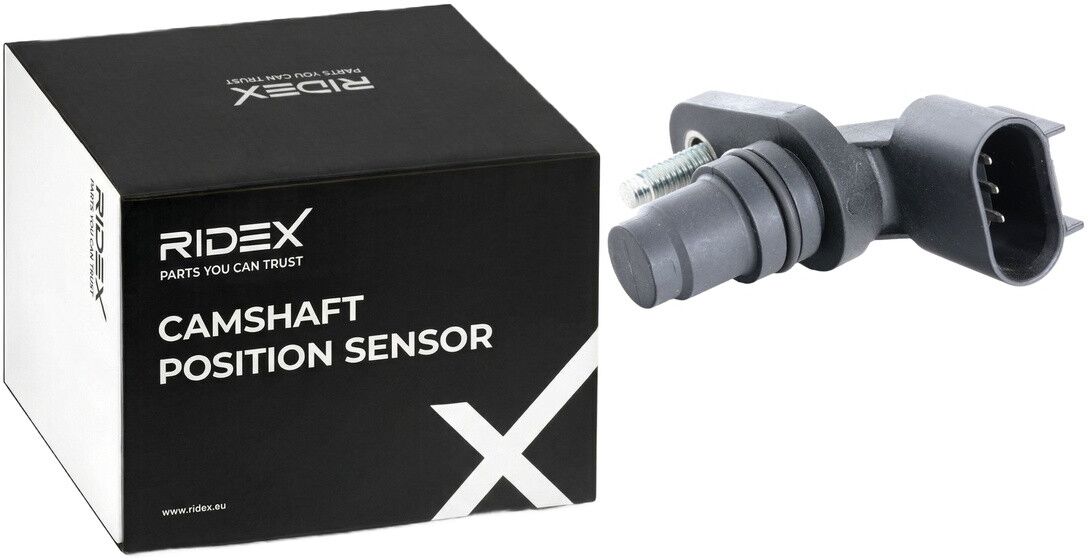
RIDEX 3946S0143 Camshaft position sensorNumber of pins: 3; Connector Shape: oval; Supplementary Article / Supplementary Info Info 2: without cable; Fitting Depth [mm]: 28,5; Colour: black; Voltage [V]: 12; Sensor Type: Hall Sensor; Engine Code: LE56,99 £*Shipping: 8,45 £Secure redirect to the provider
-
RIDEX 3946S0066 Camshaft position sensorHeight: 28; Required quantity: 1; Colour: black; Operating Mode: Electric; Sensor Type: Active sensor, Hall Sensor; Number of pins: 3; Rated Voltage [V]: 12; Fitting Depth [mm]: 28; Supplementary Article / Supplementary Info Info 2: for camshaft, without cable, with seal ring; Connector Shape: oval; Number of mounting bores: 1; Engine Code: K9K 812, V9X 791, K4M 761, K9K 270, K4M 760, K9K 732, K9K 729, K9K 762, K9K 722, K9K 760, M9R 630, K9K, K4M 800, M9R 814, K9K 728, M9R 858, K4M 804, K9K 802, K9K 800, K9K 790, K9K 752, M9R 833, K9K 710, K9K 700, K9K 766, K4M 813, K9K 7927,59 £*Shipping: 8,45 £Secure redirect to the provider
-
Does an implication apply to both sides?
Yes, an implication applies to both sides. In an implication statement "if A then B," A is the antecedent and B is the consequent. This means that if A is true, then B must also be true. However, if A is false, then the statement is still considered true, as there is no requirement for B to be true in that case. Therefore, an implication applies to both sides, but the truth value of the antecedent does not necessarily determine the truth value of the consequent. **
-
What is the difference between allusion and implication?
An allusion is a reference to a person, place, event, or literary work that the author expects the reader to recognize and understand. It is a direct or indirect reference to something outside of the text. On the other hand, an implication is a suggestion or hint that is not explicitly stated in the text but can be inferred by the reader. It is the conclusion or meaning that the reader draws from the text based on the information provided. In summary, an allusion is a direct reference, while an implication is a subtle suggestion or inference. **
-
Can a permit also be granted by implication?
Yes, a permit can also be granted by implication. This means that even if a permit is not explicitly stated or written down, it can still be inferred or implied based on the actions or conduct of the parties involved. For example, if a property owner consistently allows a certain activity to take place on their property without objection, it can be implied that they have granted a permit for that activity. Implied permits are often based on the principle of estoppel, where a party is prevented from denying something due to their previous actions or representations. **
-
What do I not understand about disjunction and implication?
It seems like you may not fully understand the difference between disjunction and implication in logic. Disjunction, represented by the symbol "∨", is a logical operation that represents "or" - it is true if at least one of the statements is true. Implication, represented by the symbol "→", is a logical operation that represents "if...then" - it is false only when the antecedent is true and the consequent is false. Understanding the nuances of how these logical operations work and how they are used in different contexts can help clarify any confusion you may have. **
* All prices are inclusive of VAT and, if applicable, plus shipping costs. The offer information is based on the details provided by the respective shop and is updated through automated processes. Real-time updates do not occur, so deviations can occur in individual cases. ** Note: Parts of this content were created by AI.