Buy jobclick.eu ?
We are moving the project
jobclick.eu .
Are you interested in purchasing the domain
jobclick.eu ?
domain@kv-gmbh.de · 0541-91531010
Buy jobclick.eu ?
How are coordinating conjunctions formed?
Coordinating conjunctions are formed by joining two independent clauses or words together. They are typically short words such as "and," "but," "or," "nor," "for," "so," and "yet." These conjunctions are used to connect words, phrases, or clauses that have equal importance in a sentence. **
What does coordination or coordinating mean?
Coordination or coordinating refers to the process of organizing, synchronizing, and harmonizing different activities or efforts to achieve a common goal. It involves ensuring that all elements work together smoothly and efficiently towards a shared objective. Effective coordination is essential in various settings, such as businesses, organizations, and teams, to maximize productivity and achieve desired outcomes. **

Similar search terms for Coordinating
Top-Angebote
Products related to Coordinating:
-
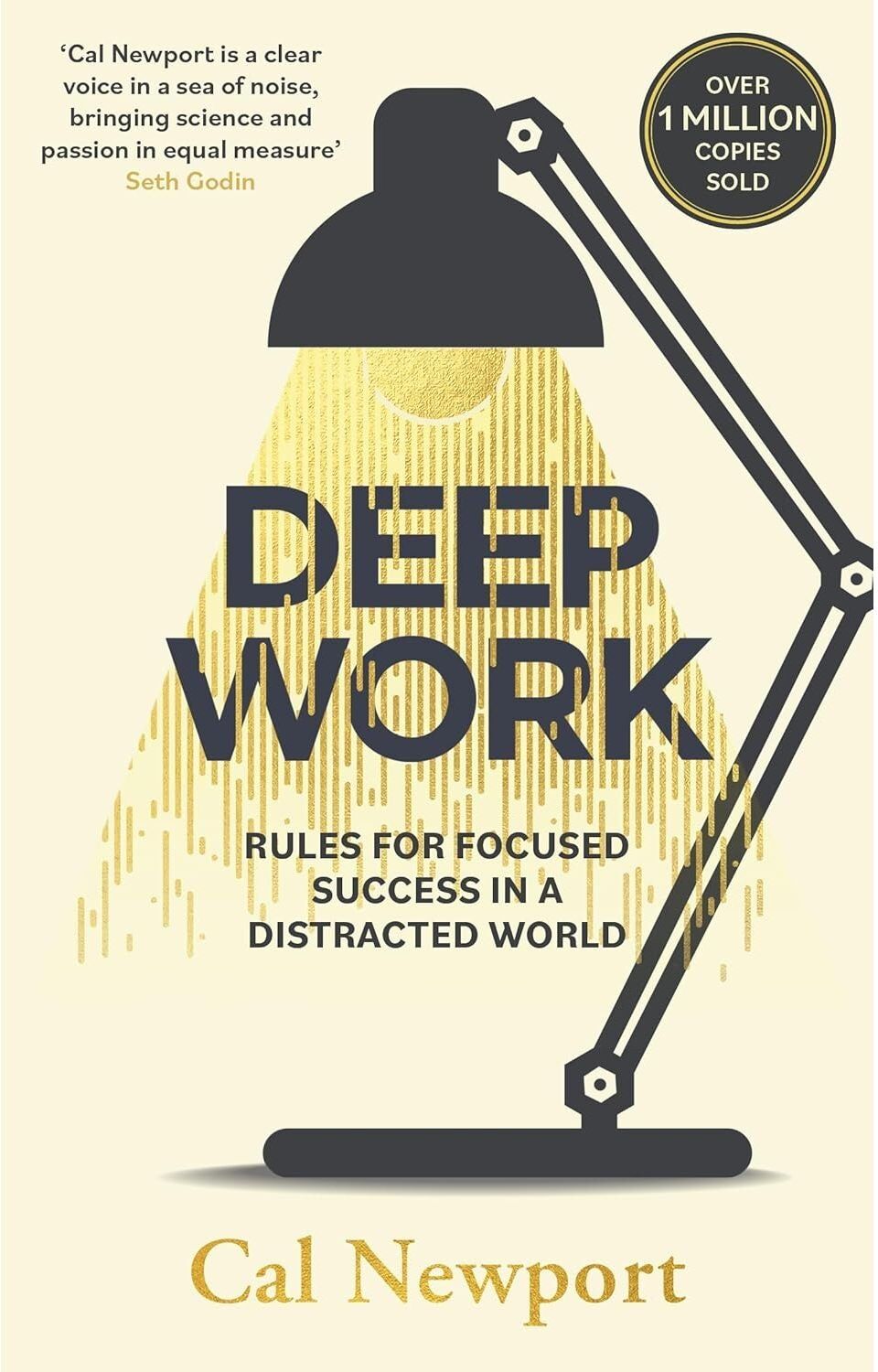
Piatkus Deep Work – Rules for Focused Success in a Distracted World by Cal Newport Productivity, Focus & Career Success BookIn a world full of distractions, the ability to focus deeply is becoming increasingly rare—and increasingly valuable. In Deep Work: Rules for Focused Success in a Distracted World, bestselling author and productivity expert Cal Newport explains why deep, concentrated work is the key to mastering complex skills, producing high-quality results, and standing out in your career. Drawing on neuroscience, psychology, and real-world examples, Newport shows how to eliminate distractions, train your focus, and work with intense concentration. The book combines compelling theory with practical strategies, helping readers build habits that support sustained attention and meaningful productivity in both professional and personal life. What You’ll Learn: Why deep work is essential for success in the modern economy How shallow work undermines productivity and focus Practical rules for building deep work habits Techniques to minimize distractions and digital overload How to produce better results in less time Perfect for professionals, students, creatives, and entrepreneurs, Deep Work is a must-read guide to achieving focus, efficiency, and long-term career success.7,99 £*Shipping: 2,99 £Secure redirect to the provider
-
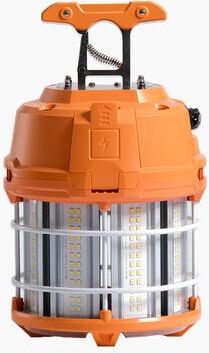
Inspired Deals Battery Compatible Portable LED Work Light, 6000LM High Output 18V 20V Job Site Lighting Yellow Battery Compatible Portable LED Work Light, 6000LM High Output 18V 20V Job Site Lighting YellowStep out of the shadows and light up every task with our rugged portable cordless LED work light that transforms how you work and play. Designed for professionals, DIYers, and outdoor adventurers alike, this light delivers up to 6000LM of bright...59,97 $*Shipping: 0,00 $Secure redirect to the provider
-
Thorsons Ultralearning: Accelerate Your Career, Master Hard Skills and Outsmart the CompetitionFuture-proof your career and maximize your competitive advantage by learning the skill necessary to stay relevant, reinvent yourself, and adapt to whatever the workplace throws your way in this essential guide. Faced with tumultuous economic times and rapid technological change, staying ahead in your career depends on continual learning―a lifelong mastery of new ideas, subjects, and skills. If you want to accomplish more and stand apart from everyone else, you need to become an ultralearner. Scott Young incorporates the latest research about the most effective learning methods and the stories of other ultralearners like himself―among them Ben Franklin, Judit Polgar, and Richard Feynman, as well as a host of others, such as little-known modern polymaths like Nigel Richards who won the World Championship of French Scrabble―without knowing French. Young documents the methods he and others have used and shows that, far from being an obscure skill limited to aggressive autodidacts, ultralearning is a powerful tool anyone can use to improve their career, studies, and life. Ultralearning explores this fascinating subculture, shares the nine principles behind every successful ultralearning project, and offers insights into how you can organize and execute a plan to learn anything deeply and quickly, without teachers or budget-busting tuition costs. Whether the goal is to be fluent in a language (or ten languages), earn the equivalent of a college degree in a fraction of the time, or master multiple skills to build a product or business from the ground up, the principles in Ultralearning will guide you to success.8,99 £*Shipping: 2,99 £Secure redirect to the provider
-
Acroma Adjustable Single Curtain Rod and Coordinating Finial SetElevate your space with minimalist elegance: Adjustable Single-Rod Curtain Rod. Tired of curtain rods that clash with your windows? Fed up with rods that restrict your every move? Our adjustable single-rod curtain rod will transform your experience.49,99 $*Shipping: 0,00 $Secure redirect to the provider



-
What are coordinating and subordinating conjunctions?
Coordinating conjunctions are words that connect two independent clauses or words of equal importance in a sentence, such as "and," "but," "or," "nor," "for," "so," and "yet." They are used to join elements that are grammatically equal. Subordinating conjunctions, on the other hand, are words that connect an independent clause with a dependent clause, indicating a relationship of dependence or hierarchy between the two clauses. Examples of subordinating conjunctions include "because," "although," "since," "while," "if," and "when." **
-
Is it a subordinating or coordinating conjunction?
The word "because" is a subordinating conjunction. It introduces a dependent clause and connects it to an independent clause, indicating a cause-and-effect relationship. Subordinating conjunctions like "because" help to show the relationship between the two clauses and indicate which is more important. **
-
How are coordinating conjunctions formed in a sentence?
Coordinating conjunctions are formed by placing them between two independent clauses or words to connect them. Common coordinating conjunctions include words like "and," "but," "or," "so," "for," "nor," and "yet." These conjunctions help to show the relationship between the two parts of a sentence, whether they are contrasting ideas (but), similar ideas (and), or alternatives (or). **
-
What is the difference between coordinating and subordinating conjunctions?
Coordinating conjunctions are used to connect two independent clauses or words of equal importance, while subordinating conjunctions are used to connect an independent clause with a dependent clause, indicating a relationship of dependence or hierarchy between the two clauses. Coordinating conjunctions include words like "and," "but," and "or," while subordinating conjunctions include words like "because," "although," and "while." Coordinating conjunctions create compound sentences, while subordinating conjunctions create complex sentences. **


What is the meaning of coordinating and subordinating conjunctions?
Coordinating conjunctions are used to connect two or more independent clauses or words of equal importance in a sentence. They include words like "and," "but," "or," "nor," "for," "so," and "yet." Subordinating conjunctions, on the other hand, are used to connect an independent clause with a dependent clause, indicating a relationship of dependence or subordination between the two clauses. Examples of subordinating conjunctions include "because," "although," "while," "if," "since," "when," and "before." Both types of conjunctions are important for creating complex and compound sentences and for showing the relationship between different parts of a sentence. **
What is the coordinating atom in the cyanide ion CN- in complex chemistry?
In complex chemistry, the coordinating atom in the cyanide ion CN- is the carbon atom. The carbon atom forms a coordinate covalent bond with a metal ion, acting as the central coordinating atom in the complex. This allows the cyanide ion to act as a ligand, binding to the metal ion and forming a coordination complex. The carbon atom's lone pair of electrons is used to form the coordinate covalent bond with the metal ion. **
Top-Angebote
Products related to Coordinating:
-
Acroma Adjustable Single Curtain Rod and Coordinating Finial SetElevate your space with minimalist elegance: Adjustable Single-Rod Curtain Rod. Tired of curtain rods that clash with your windows? Fed up with rods that restrict your every move? Our adjustable single-rod curtain rod will transform your experience.46,99 $*Shipping: 0,00 $Secure redirect to the provider
-
All Categories Goods LED Temporary Work Light Linkable Construction Job Site Lamp LED Temporary Work Light Linkable Construction Job Site LampLight up demanding spaces with a LED temporary work light built to keep every task clear, safe, and visible. This 60W hanging lamp is made for contractors, remodelers, workshop owners, and anyone who needs dependable temporary illumination. With...132,97 $*Shipping: 0,00 $Secure redirect to the provider
-
Piatkus Deep Work – Rules for Focused Success in a Distracted World by Cal Newport Productivity, Focus & Career Success BookIn a world full of distractions, the ability to focus deeply is becoming increasingly rare—and increasingly valuable. In Deep Work: Rules for Focused Success in a Distracted World, bestselling author and productivity expert Cal Newport explains why deep, concentrated work is the key to mastering complex skills, producing high-quality results, and standing out in your career. Drawing on neuroscience, psychology, and real-world examples, Newport shows how to eliminate distractions, train your focus, and work with intense concentration. The book combines compelling theory with practical strategies, helping readers build habits that support sustained attention and meaningful productivity in both professional and personal life. What You’ll Learn: Why deep work is essential for success in the modern economy How shallow work undermines productivity and focus Practical rules for building deep work habits Techniques to minimize distractions and digital overload How to produce better results in less time Perfect for professionals, students, creatives, and entrepreneurs, Deep Work is a must-read guide to achieving focus, efficiency, and long-term career success.7,99 £*Shipping: 2,99 £Secure redirect to the provider
-
Inspired Deals Battery Compatible Portable LED Work Light, 6000LM High Output 18V 20V Job Site Lighting Yellow Battery Compatible Portable LED Work Light, 6000LM High Output 18V 20V Job Site Lighting YellowStep out of the shadows and light up every task with our rugged portable cordless LED work light that transforms how you work and play. Designed for professionals, DIYers, and outdoor adventurers alike, this light delivers up to 6000LM of bright...59,97 $*Shipping: 0,00 $Secure redirect to the provider
-
How are coordinating conjunctions formed?
Coordinating conjunctions are formed by joining two independent clauses or words together. They are typically short words such as "and," "but," "or," "nor," "for," "so," and "yet." These conjunctions are used to connect words, phrases, or clauses that have equal importance in a sentence. **
-
What does coordination or coordinating mean?
Coordination or coordinating refers to the process of organizing, synchronizing, and harmonizing different activities or efforts to achieve a common goal. It involves ensuring that all elements work together smoothly and efficiently towards a shared objective. Effective coordination is essential in various settings, such as businesses, organizations, and teams, to maximize productivity and achieve desired outcomes. **
-
What are coordinating and subordinating conjunctions?
Coordinating conjunctions are words that connect two independent clauses or words of equal importance in a sentence, such as "and," "but," "or," "nor," "for," "so," and "yet." They are used to join elements that are grammatically equal. Subordinating conjunctions, on the other hand, are words that connect an independent clause with a dependent clause, indicating a relationship of dependence or hierarchy between the two clauses. Examples of subordinating conjunctions include "because," "although," "since," "while," "if," and "when." **
-
Is it a subordinating or coordinating conjunction?
The word "because" is a subordinating conjunction. It introduces a dependent clause and connects it to an independent clause, indicating a cause-and-effect relationship. Subordinating conjunctions like "because" help to show the relationship between the two clauses and indicate which is more important. **
Similar search terms for Coordinating
-
Thorsons Ultralearning: Accelerate Your Career, Master Hard Skills and Outsmart the CompetitionFuture-proof your career and maximize your competitive advantage by learning the skill necessary to stay relevant, reinvent yourself, and adapt to whatever the workplace throws your way in this essential guide. Faced with tumultuous economic times and rapid technological change, staying ahead in your career depends on continual learning―a lifelong mastery of new ideas, subjects, and skills. If you want to accomplish more and stand apart from everyone else, you need to become an ultralearner. Scott Young incorporates the latest research about the most effective learning methods and the stories of other ultralearners like himself―among them Ben Franklin, Judit Polgar, and Richard Feynman, as well as a host of others, such as little-known modern polymaths like Nigel Richards who won the World Championship of French Scrabble―without knowing French. Young documents the methods he and others have used and shows that, far from being an obscure skill limited to aggressive autodidacts, ultralearning is a powerful tool anyone can use to improve their career, studies, and life. Ultralearning explores this fascinating subculture, shares the nine principles behind every successful ultralearning project, and offers insights into how you can organize and execute a plan to learn anything deeply and quickly, without teachers or budget-busting tuition costs. Whether the goal is to be fluent in a language (or ten languages), earn the equivalent of a college degree in a fraction of the time, or master multiple skills to build a product or business from the ground up, the principles in Ultralearning will guide you to success.8,99 £*Shipping: 2,99 £Secure redirect to the provider
-
Acroma Adjustable Single Curtain Rod and Coordinating Finial SetElevate your space with minimalist elegance: Adjustable Single-Rod Curtain Rod. Tired of curtain rods that clash with your windows? Fed up with rods that restrict your every move? Our adjustable single-rod curtain rod will transform your experience.49,99 $*Shipping: 0,00 $Secure redirect to the provider
-
Acroma Adjustable Single Curtain Rod and Coordinating Finial SetElevate your space with minimalist elegance: Adjustable Single-Rod Curtain Rod. Tired of curtain rods that clash with your windows? Fed up with rods that restrict your every move? Our adjustable single-rod curtain rod will transform your experience.49,99 $*Shipping: 0,00 $Secure redirect to the provider
-
Acroma Adjustable Single Curtain Rod and Coordinating Finial SetElevate your space with minimalist elegance: Adjustable Single-Rod Curtain Rod. Tired of curtain rods that clash with your windows? Fed up with rods that restrict your every move? Our adjustable single-rod curtain rod will transform your experience.40,99 $*Shipping: 0,00 $Secure redirect to the provider
-
How are coordinating conjunctions formed in a sentence?
Coordinating conjunctions are formed by placing them between two independent clauses or words to connect them. Common coordinating conjunctions include words like "and," "but," "or," "so," "for," "nor," and "yet." These conjunctions help to show the relationship between the two parts of a sentence, whether they are contrasting ideas (but), similar ideas (and), or alternatives (or). **
-
What is the difference between coordinating and subordinating conjunctions?
Coordinating conjunctions are used to connect two independent clauses or words of equal importance, while subordinating conjunctions are used to connect an independent clause with a dependent clause, indicating a relationship of dependence or hierarchy between the two clauses. Coordinating conjunctions include words like "and," "but," and "or," while subordinating conjunctions include words like "because," "although," and "while." Coordinating conjunctions create compound sentences, while subordinating conjunctions create complex sentences. **
-
What is the meaning of coordinating and subordinating conjunctions?
Coordinating conjunctions are used to connect two or more independent clauses or words of equal importance in a sentence. They include words like "and," "but," "or," "nor," "for," "so," and "yet." Subordinating conjunctions, on the other hand, are used to connect an independent clause with a dependent clause, indicating a relationship of dependence or subordination between the two clauses. Examples of subordinating conjunctions include "because," "although," "while," "if," "since," "when," and "before." Both types of conjunctions are important for creating complex and compound sentences and for showing the relationship between different parts of a sentence. **
-
What is the coordinating atom in the cyanide ion CN- in complex chemistry?
In complex chemistry, the coordinating atom in the cyanide ion CN- is the carbon atom. The carbon atom forms a coordinate covalent bond with a metal ion, acting as the central coordinating atom in the complex. This allows the cyanide ion to act as a ligand, binding to the metal ion and forming a coordination complex. The carbon atom's lone pair of electrons is used to form the coordinate covalent bond with the metal ion. **
* All prices are inclusive of VAT and, if applicable, plus shipping costs. The offer information is based on the details provided by the respective shop and is updated through automated processes. Real-time updates do not occur, so deviations can occur in individual cases. ** Note: Parts of this content were created by AI.