Buy jobclick.eu ?
We are moving the project
jobclick.eu .
Are you interested in purchasing the domain
jobclick.eu ?
domain@kv-gmbh.de · 0541-91531010
Buy jobclick.eu ?
How do logarithmic sorting algorithms work?
Logarithmic sorting algorithms work by dividing the input data into smaller subgroups and recursively sorting these subgroups. One common example is the merge sort algorithm, which divides the input list into two halves, sorts each half separately, and then merges them back together in sorted order. By repeatedly dividing the data and merging the sorted subgroups, logarithmic sorting algorithms achieve a time complexity of O(n log n), making them efficient for large datasets. **
What are logarithmic equations?
Logarithmic equations are equations that involve logarithmic functions. These equations typically involve finding the value of the variable that makes the logarithmic expression equal to a given number. Logarithmic equations can be solved by using properties of logarithms, such as the power rule and the product rule, to simplify the equation and isolate the variable. The solutions to logarithmic equations can be found by using the properties of logarithms to rewrite the equation in exponential form and then solving for the variable. **
Similar search terms for Logarithmic
Top-Angebote
Products related to Logarithmic:
-
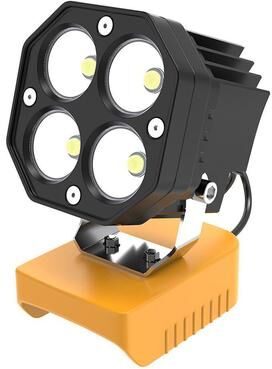
Inspired Deals Battery Compatible Portable LED Work Light, 6000LM High Output 18V 20V Job Site Lighting Yellow Battery Compatible Portable LED Work Light, 6000LM High Output 18V 20V Job Site Lighting YellowStep out of the shadows and light up every task with our rugged portable cordless LED work light that transforms how you work and play. Designed for professionals, DIYers, and outdoor adventurers alike, this light delivers up to 6000LM of bright...59,97 $*Shipping: 0,00 $Secure redirect to the provider
-
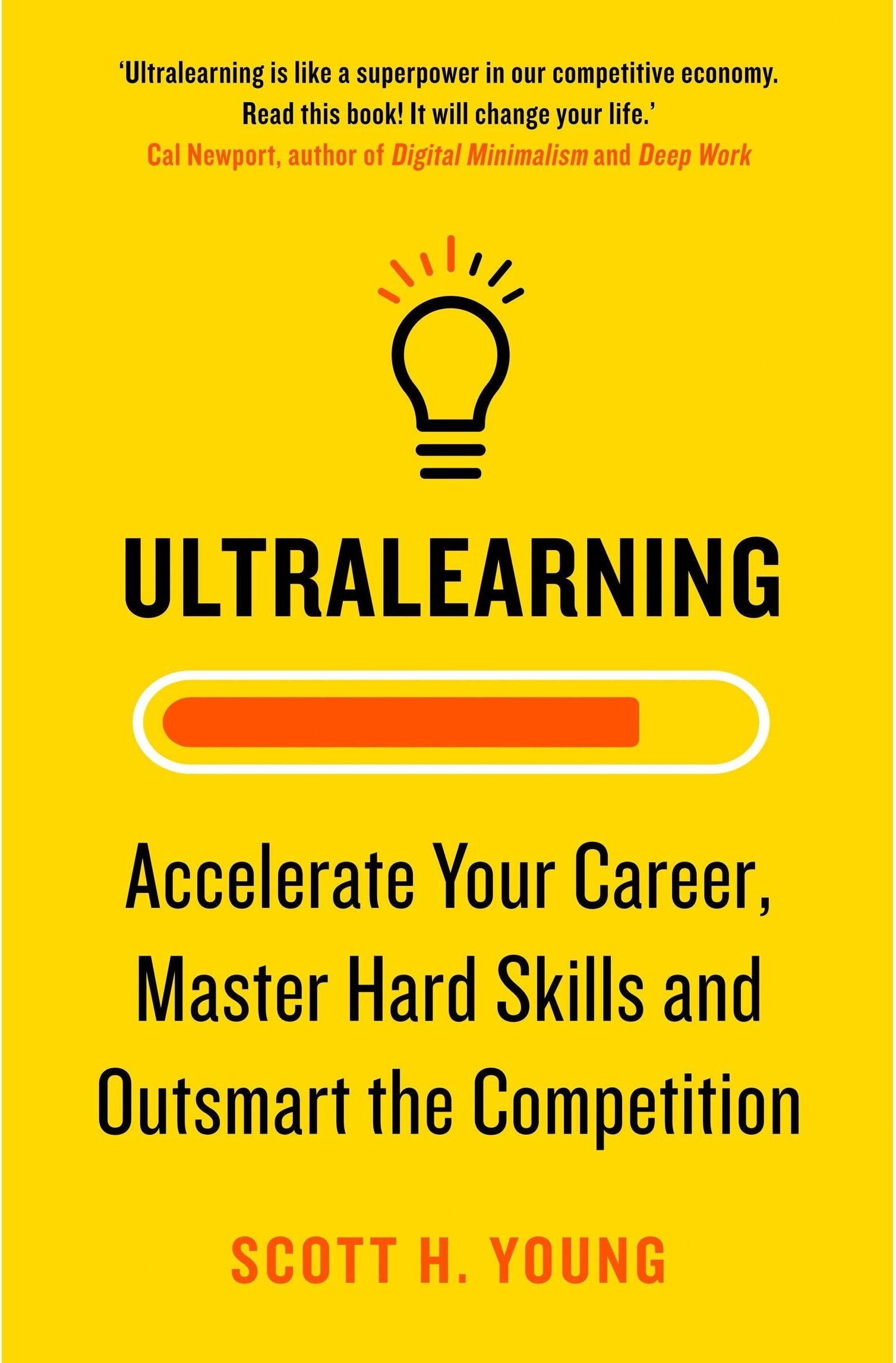
Thorsons Ultralearning: Accelerate Your Career, Master Hard Skills and Outsmart the CompetitionFuture-proof your career and maximize your competitive advantage by learning the skill necessary to stay relevant, reinvent yourself, and adapt to whatever the workplace throws your way in this essential guide. Faced with tumultuous economic times and rapid technological change, staying ahead in your career depends on continual learning―a lifelong mastery of new ideas, subjects, and skills. If you want to accomplish more and stand apart from everyone else, you need to become an ultralearner. Scott Young incorporates the latest research about the most effective learning methods and the stories of other ultralearners like himself―among them Ben Franklin, Judit Polgar, and Richard Feynman, as well as a host of others, such as little-known modern polymaths like Nigel Richards who won the World Championship of French Scrabble―without knowing French. Young documents the methods he and others have used and shows that, far from being an obscure skill limited to aggressive autodidacts, ultralearning is a powerful tool anyone can use to improve their career, studies, and life. Ultralearning explores this fascinating subculture, shares the nine principles behind every successful ultralearning project, and offers insights into how you can organize and execute a plan to learn anything deeply and quickly, without teachers or budget-busting tuition costs. Whether the goal is to be fluent in a language (or ten languages), earn the equivalent of a college degree in a fraction of the time, or master multiple skills to build a product or business from the ground up, the principles in Ultralearning will guide you to success.8,99 £*Shipping: 2,99 £Secure redirect to the provider
-
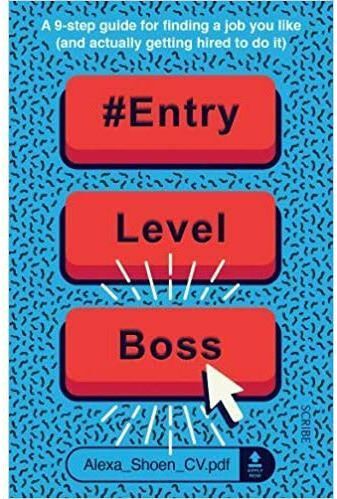
Scribe UK Find a Job - #ENTRYLEVELBOSS - a 9-step guide for finding a job you likeFind a Job - Banging your head against the wall with the job search? #ENTRYLEVELBOSS will help you stop freaking out. Miserable in your current role but no idea what to do next? With this book you'll be able to make a decision, no personality tests required. Convinced that you are the most unhireable person on this planet? That's statistically improbable - and you'll be amazed at how employable you'll be by the time you have finished reading. This is personal training for your career, based on a step-by-step plan that includes: All the intel you need about getting hired in today's world, in today's industries, and with today's tools. Hyper-specific advice including templates for networking emails, CVs, and cover letters. Straight-to-the-point guidance about what not to do. A solid dose of humour and emotional support from someone who really has been there. The world of work has changed, and getting hired today for a job you actually want is going to take a lot more than a neatly typed cover letter and a well-pressed suit. But along with all the challenges of the new economy come unprecedented opportunities, and careers expert Alexa Shoen is here to unlock them for you.4,99 £*Shipping: 1,99 £Secure redirect to the provider
-
Wrendale Designs 'Sleeping on the Job' ChalkboardThe Wrendale Designs Sleeping on the Job Chalkboard is perfect for jotting down lists, notes or meal plans. Its charming border collie and rabbit design adds a playful touch, making it ideal for the kitchen or any space in your home. Featuring an easy-to-hang rope hanger and a ledge to keep a piece of chalk handy, this chalkboard combines functionality with style. Dimensions: 50 x 25cm.19,80 £*Shipping: 3,50 £Secure redirect to the provider

-
What are logarithmic exponential equations?
Logarithmic exponential equations are equations that involve both logarithmic and exponential functions. These equations typically involve solving for an unknown variable that appears as an exponent in an exponential function or as the argument of a logarithmic function. To solve these equations, one can use properties of logarithms and exponentials to manipulate the equation and isolate the variable. These types of equations are commonly encountered in mathematics, engineering, and the sciences. **
-
What is a logarithmic distribution?
A logarithmic distribution is a probability distribution that follows a logarithmic function. In this distribution, the probability of an event occurring decreases as the value of the event increases. It is characterized by a long tail on the left side of the distribution, indicating a higher probability of lower values. Logarithmic distributions are commonly used in fields such as economics, finance, and information theory to model phenomena where a few extreme events have a significant impact. **
-
How is semi-logarithmic paper clarified?
Semi-logarithmic paper is clarified by having one axis (usually the y-axis) represented on a logarithmic scale, while the other axis (usually the x-axis) is represented on a linear scale. This allows for a wider range of values to be displayed on the graph, making it easier to visualize data that spans multiple orders of magnitude. The logarithmic scale compresses the data at the higher end of the scale, making it easier to see trends and patterns in the data. **
-
What are logarithmic functions in mathematics?
Logarithmic functions are mathematical functions that represent the inverse of exponential functions. They are used to solve equations involving exponential growth or decay, and are commonly used in fields such as finance, science, and engineering. The logarithmic function log_b(x) represents the power to which the base (b) must be raised to obtain the value x. This function is useful for converting between different bases and for solving equations involving exponential relationships. **


What does the graph of an exponential function look like in a logarithmic-logarithmic coordinate system?
In a logarithmic-logarithmic coordinate system, the graph of an exponential function will appear as a straight line. This is because in a logarithmic-logarithmic system, both the x-axis and y-axis are logarithmic scales. As a result, the exponential function's growth or decay will be represented as a straight line with a specific slope, depending on the base of the exponential function. The steepness of the line will indicate the rate of growth or decay of the exponential function. **
How can one rearrange a logarithmic equation?
To rearrange a logarithmic equation, you can use the properties of logarithms to simplify and manipulate the equation. For example, you can use the power property of logarithms to move the exponent as a coefficient in front of the logarithm. You can also use the inverse property of logarithms to rewrite logarithmic equations in exponential form. By applying these properties, you can rearrange the equation to isolate the logarithm or the variable you are solving for. **
Top-Angebote
Products related to Logarithmic:
-
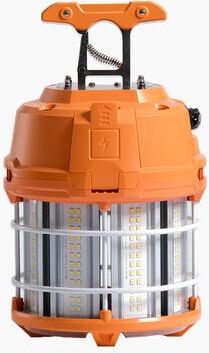
All Categories Goods LED Temporary Work Light Linkable Construction Job Site Lamp LED Temporary Work Light Linkable Construction Job Site LampLight up demanding spaces with a LED temporary work light built to keep every task clear, safe, and visible. This 60W hanging lamp is made for contractors, remodelers, workshop owners, and anyone who needs dependable temporary illumination. With...132,97 $*Shipping: 0,00 $Secure redirect to the provider
-
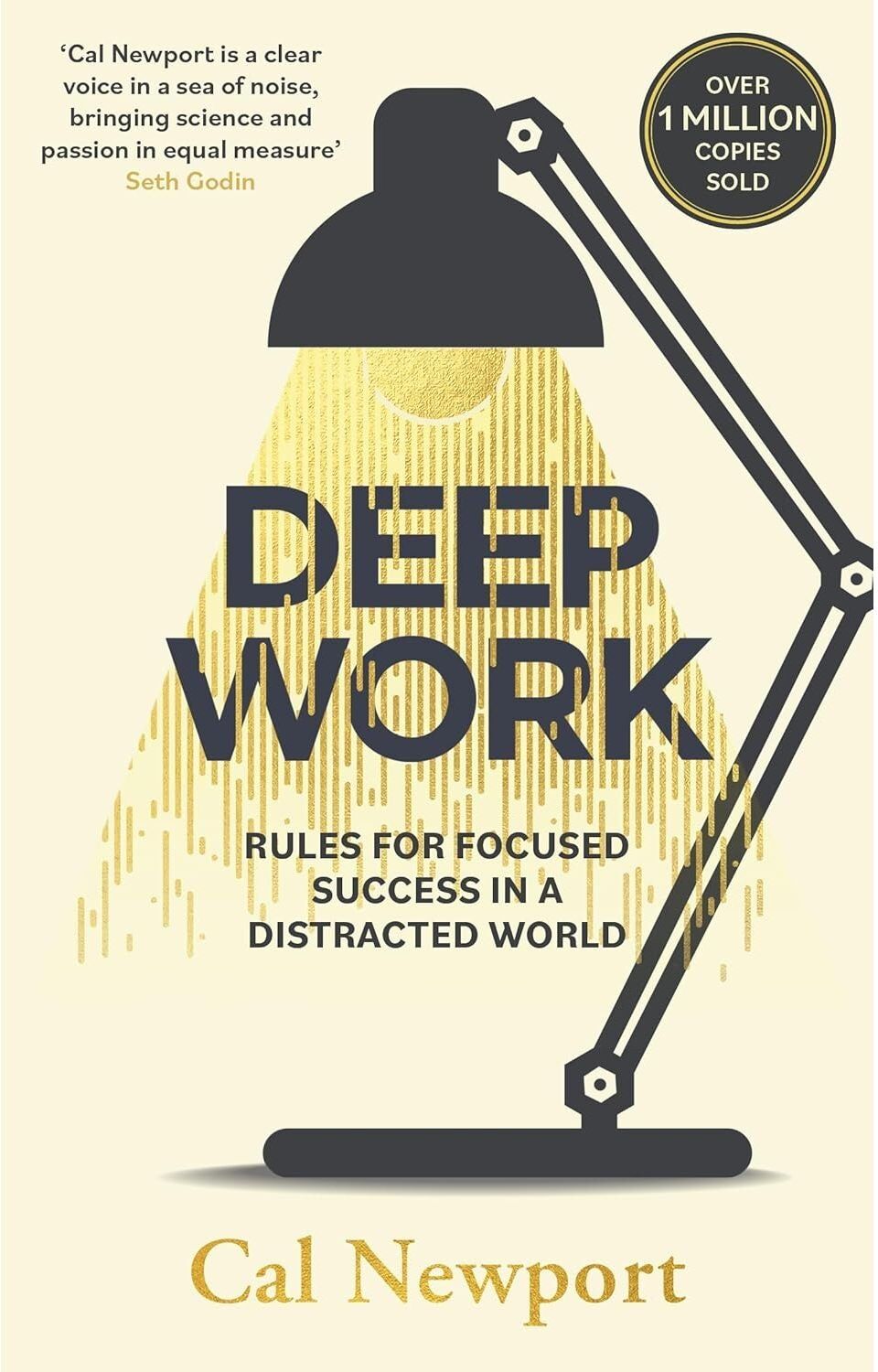
Piatkus Deep Work – Rules for Focused Success in a Distracted World by Cal Newport Productivity, Focus & Career Success BookIn a world full of distractions, the ability to focus deeply is becoming increasingly rare—and increasingly valuable. In Deep Work: Rules for Focused Success in a Distracted World, bestselling author and productivity expert Cal Newport explains why deep, concentrated work is the key to mastering complex skills, producing high-quality results, and standing out in your career. Drawing on neuroscience, psychology, and real-world examples, Newport shows how to eliminate distractions, train your focus, and work with intense concentration. The book combines compelling theory with practical strategies, helping readers build habits that support sustained attention and meaningful productivity in both professional and personal life. What You’ll Learn: Why deep work is essential for success in the modern economy How shallow work undermines productivity and focus Practical rules for building deep work habits Techniques to minimize distractions and digital overload How to produce better results in less time Perfect for professionals, students, creatives, and entrepreneurs, Deep Work is a must-read guide to achieving focus, efficiency, and long-term career success.7,99 £*Shipping: 2,99 £Secure redirect to the provider
-
Inspired Deals Battery Compatible Portable LED Work Light, 6000LM High Output 18V 20V Job Site Lighting Yellow Battery Compatible Portable LED Work Light, 6000LM High Output 18V 20V Job Site Lighting YellowStep out of the shadows and light up every task with our rugged portable cordless LED work light that transforms how you work and play. Designed for professionals, DIYers, and outdoor adventurers alike, this light delivers up to 6000LM of bright...59,97 $*Shipping: 0,00 $Secure redirect to the provider
-
Thorsons Ultralearning: Accelerate Your Career, Master Hard Skills and Outsmart the CompetitionFuture-proof your career and maximize your competitive advantage by learning the skill necessary to stay relevant, reinvent yourself, and adapt to whatever the workplace throws your way in this essential guide. Faced with tumultuous economic times and rapid technological change, staying ahead in your career depends on continual learning―a lifelong mastery of new ideas, subjects, and skills. If you want to accomplish more and stand apart from everyone else, you need to become an ultralearner. Scott Young incorporates the latest research about the most effective learning methods and the stories of other ultralearners like himself―among them Ben Franklin, Judit Polgar, and Richard Feynman, as well as a host of others, such as little-known modern polymaths like Nigel Richards who won the World Championship of French Scrabble―without knowing French. Young documents the methods he and others have used and shows that, far from being an obscure skill limited to aggressive autodidacts, ultralearning is a powerful tool anyone can use to improve their career, studies, and life. Ultralearning explores this fascinating subculture, shares the nine principles behind every successful ultralearning project, and offers insights into how you can organize and execute a plan to learn anything deeply and quickly, without teachers or budget-busting tuition costs. Whether the goal is to be fluent in a language (or ten languages), earn the equivalent of a college degree in a fraction of the time, or master multiple skills to build a product or business from the ground up, the principles in Ultralearning will guide you to success.8,99 £*Shipping: 2,99 £Secure redirect to the provider
-
How do logarithmic sorting algorithms work?
Logarithmic sorting algorithms work by dividing the input data into smaller subgroups and recursively sorting these subgroups. One common example is the merge sort algorithm, which divides the input list into two halves, sorts each half separately, and then merges them back together in sorted order. By repeatedly dividing the data and merging the sorted subgroups, logarithmic sorting algorithms achieve a time complexity of O(n log n), making them efficient for large datasets. **
-
What are logarithmic equations?
Logarithmic equations are equations that involve logarithmic functions. These equations typically involve finding the value of the variable that makes the logarithmic expression equal to a given number. Logarithmic equations can be solved by using properties of logarithms, such as the power rule and the product rule, to simplify the equation and isolate the variable. The solutions to logarithmic equations can be found by using the properties of logarithms to rewrite the equation in exponential form and then solving for the variable. **
-
What are logarithmic exponential equations?
Logarithmic exponential equations are equations that involve both logarithmic and exponential functions. These equations typically involve solving for an unknown variable that appears as an exponent in an exponential function or as the argument of a logarithmic function. To solve these equations, one can use properties of logarithms and exponentials to manipulate the equation and isolate the variable. These types of equations are commonly encountered in mathematics, engineering, and the sciences. **
-
What is a logarithmic distribution?
A logarithmic distribution is a probability distribution that follows a logarithmic function. In this distribution, the probability of an event occurring decreases as the value of the event increases. It is characterized by a long tail on the left side of the distribution, indicating a higher probability of lower values. Logarithmic distributions are commonly used in fields such as economics, finance, and information theory to model phenomena where a few extreme events have a significant impact. **
Similar search terms for Logarithmic
-
Scribe UK Find a Job - #ENTRYLEVELBOSS - a 9-step guide for finding a job you likeFind a Job - Banging your head against the wall with the job search? #ENTRYLEVELBOSS will help you stop freaking out. Miserable in your current role but no idea what to do next? With this book you'll be able to make a decision, no personality tests required. Convinced that you are the most unhireable person on this planet? That's statistically improbable - and you'll be amazed at how employable you'll be by the time you have finished reading. This is personal training for your career, based on a step-by-step plan that includes: All the intel you need about getting hired in today's world, in today's industries, and with today's tools. Hyper-specific advice including templates for networking emails, CVs, and cover letters. Straight-to-the-point guidance about what not to do. A solid dose of humour and emotional support from someone who really has been there. The world of work has changed, and getting hired today for a job you actually want is going to take a lot more than a neatly typed cover letter and a well-pressed suit. But along with all the challenges of the new economy come unprecedented opportunities, and careers expert Alexa Shoen is here to unlock them for you.4,99 £*Shipping: 1,99 £Secure redirect to the provider
-
Wrendale Designs 'Sleeping on the Job' ChalkboardThe Wrendale Designs Sleeping on the Job Chalkboard is perfect for jotting down lists, notes or meal plans. Its charming border collie and rabbit design adds a playful touch, making it ideal for the kitchen or any space in your home. Featuring an easy-to-hang rope hanger and a ledge to keep a piece of chalk handy, this chalkboard combines functionality with style. Dimensions: 50 x 25cm.19,80 £*Shipping: 3,50 £Secure redirect to the provider
-
Smart Shopping Spot Educational Puzzle Toy For Kids, Matching Card Game, Baby Cognitive Fruit Animal Learning Montessori Puzzle character OccupationEngage Your Childs Mind with a Fun Learning Experience The Matching Card Game for Kids is an engaging and educational puzzle designed to stimulate young minds. Featuring vibrant images of fruit and animals, this game encourages cognitive...29,97 $*Shipping: 0,00 $Secure redirect to the provider
-
Uplifted Goods Heavy Duty Multi Position Muscle Sculpting System Heavy Duty Multi Position Muscle Sculpting SystemAchieve a professional grade upper body transformation with the Heavy Duty Multi Position Muscle Sculpting System. This professional grade fitness station is meticulously engineered with a specialized color coded path architecture designed to target...74,97 $*Shipping: 0,00 $Secure redirect to the provider
-
How is semi-logarithmic paper clarified?
Semi-logarithmic paper is clarified by having one axis (usually the y-axis) represented on a logarithmic scale, while the other axis (usually the x-axis) is represented on a linear scale. This allows for a wider range of values to be displayed on the graph, making it easier to visualize data that spans multiple orders of magnitude. The logarithmic scale compresses the data at the higher end of the scale, making it easier to see trends and patterns in the data. **
-
What are logarithmic functions in mathematics?
Logarithmic functions are mathematical functions that represent the inverse of exponential functions. They are used to solve equations involving exponential growth or decay, and are commonly used in fields such as finance, science, and engineering. The logarithmic function log_b(x) represents the power to which the base (b) must be raised to obtain the value x. This function is useful for converting between different bases and for solving equations involving exponential relationships. **
-
What does the graph of an exponential function look like in a logarithmic-logarithmic coordinate system?
In a logarithmic-logarithmic coordinate system, the graph of an exponential function will appear as a straight line. This is because in a logarithmic-logarithmic system, both the x-axis and y-axis are logarithmic scales. As a result, the exponential function's growth or decay will be represented as a straight line with a specific slope, depending on the base of the exponential function. The steepness of the line will indicate the rate of growth or decay of the exponential function. **
-
How can one rearrange a logarithmic equation?
To rearrange a logarithmic equation, you can use the properties of logarithms to simplify and manipulate the equation. For example, you can use the power property of logarithms to move the exponent as a coefficient in front of the logarithm. You can also use the inverse property of logarithms to rewrite logarithmic equations in exponential form. By applying these properties, you can rearrange the equation to isolate the logarithm or the variable you are solving for. **
* All prices are inclusive of VAT and, if applicable, plus shipping costs. The offer information is based on the details provided by the respective shop and is updated through automated processes. Real-time updates do not occur, so deviations can occur in individual cases. ** Note: Parts of this content were created by AI.