Buy jobclick.eu ?
We are moving the project
jobclick.eu .
Are you interested in purchasing the domain
jobclick.eu ?
domain@kv-gmbh.de · 0541-91531010
Buy jobclick.eu ?
What are irregular verbs and strong verbs?
Irregular verbs are verbs that do not follow the regular pattern of adding -ed to form their past tense and past participle. Instead, they have unique forms for these tenses. Strong verbs are a type of irregular verb that form their past tense and past participle by changing the vowel sound in the base form of the verb. These verbs often have a more complex and unpredictable pattern of inflection compared to regular and weak verbs. **
Can you please explain the difference between main verbs, auxiliary verbs, and modal verbs?
Main verbs are the primary verbs in a sentence that express the main action or state of being. Auxiliary verbs, also known as helping verbs, are used alongside main verbs to form different tenses, moods, or voices. Modal verbs are a type of auxiliary verb that express possibility, necessity, ability, or permission. They are used to modify the meaning of the main verb in a sentence. **

Similar search terms for Verbs
Top-Angebote
Products related to Verbs:
-
Inspired Deals Battery Compatible Portable LED Work Light, 6000LM High Output 18V 20V Job Site Lighting Yellow Battery Compatible Portable LED Work Light, 6000LM High Output 18V 20V Job Site Lighting YellowStep out of the shadows and light up every task with our rugged portable cordless LED work light that transforms how you work and play. Designed for professionals, DIYers, and outdoor adventurers alike, this light delivers up to 6000LM of bright...59,97 $*Shipping: 0,00 $Secure redirect to the provider
-
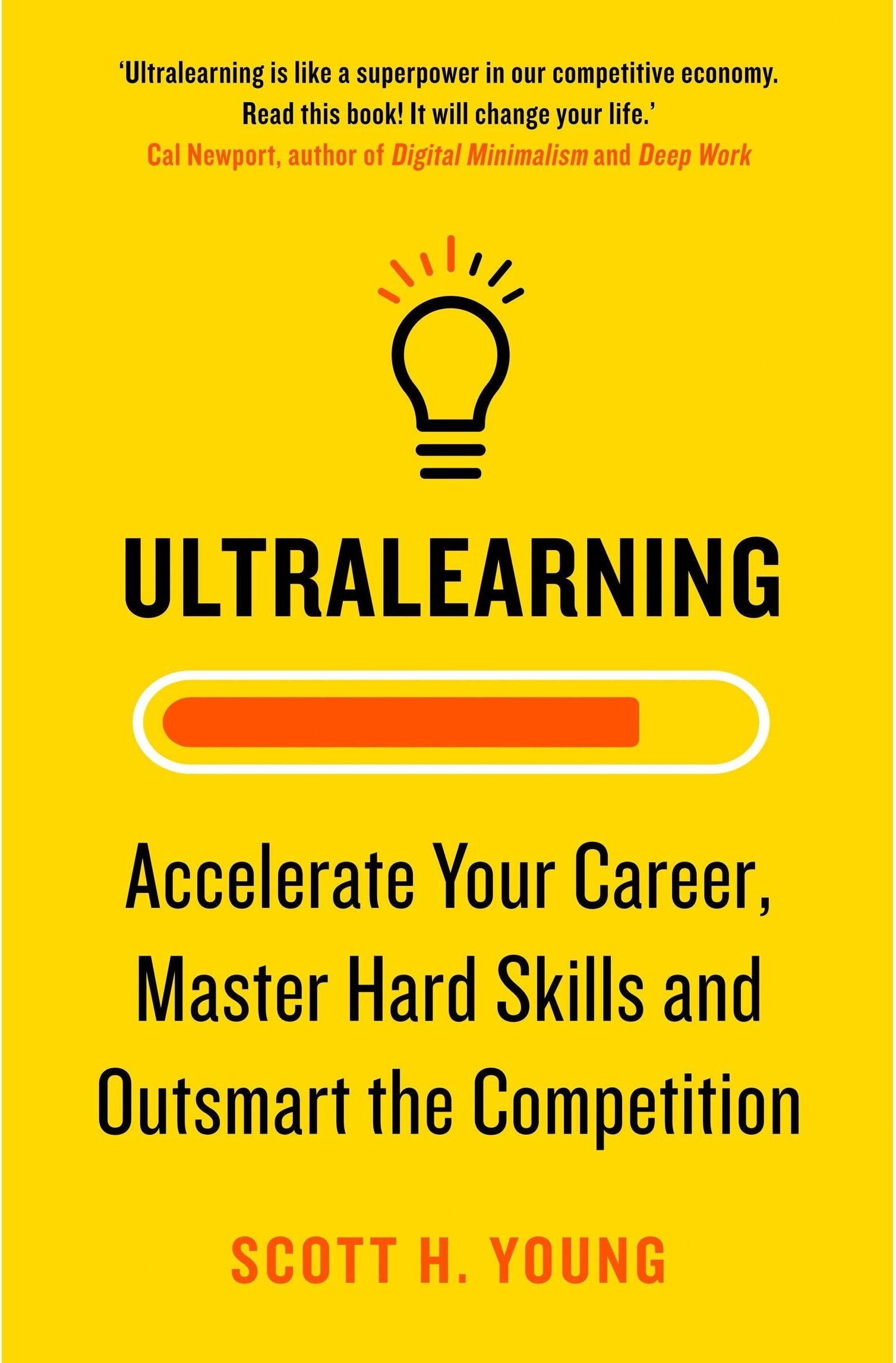
Thorsons Ultralearning: Accelerate Your Career, Master Hard Skills and Outsmart the CompetitionFuture-proof your career and maximize your competitive advantage by learning the skill necessary to stay relevant, reinvent yourself, and adapt to whatever the workplace throws your way in this essential guide. Faced with tumultuous economic times and rapid technological change, staying ahead in your career depends on continual learning―a lifelong mastery of new ideas, subjects, and skills. If you want to accomplish more and stand apart from everyone else, you need to become an ultralearner. Scott Young incorporates the latest research about the most effective learning methods and the stories of other ultralearners like himself―among them Ben Franklin, Judit Polgar, and Richard Feynman, as well as a host of others, such as little-known modern polymaths like Nigel Richards who won the World Championship of French Scrabble―without knowing French. Young documents the methods he and others have used and shows that, far from being an obscure skill limited to aggressive autodidacts, ultralearning is a powerful tool anyone can use to improve their career, studies, and life. Ultralearning explores this fascinating subculture, shares the nine principles behind every successful ultralearning project, and offers insights into how you can organize and execute a plan to learn anything deeply and quickly, without teachers or budget-busting tuition costs. Whether the goal is to be fluent in a language (or ten languages), earn the equivalent of a college degree in a fraction of the time, or master multiple skills to build a product or business from the ground up, the principles in Ultralearning will guide you to success.8,99 £*Shipping: 2,99 £Secure redirect to the provider
-
Scribe UK Find a Job - #ENTRYLEVELBOSS - a 9-step guide for finding a job you likeFind a Job - Banging your head against the wall with the job search? #ENTRYLEVELBOSS will help you stop freaking out. Miserable in your current role but no idea what to do next? With this book you'll be able to make a decision, no personality tests required. Convinced that you are the most unhireable person on this planet? That's statistically improbable - and you'll be amazed at how employable you'll be by the time you have finished reading. This is personal training for your career, based on a step-by-step plan that includes: All the intel you need about getting hired in today's world, in today's industries, and with today's tools. Hyper-specific advice including templates for networking emails, CVs, and cover letters. Straight-to-the-point guidance about what not to do. A solid dose of humour and emotional support from someone who really has been there. The world of work has changed, and getting hired today for a job you actually want is going to take a lot more than a neatly typed cover letter and a well-pressed suit. But along with all the challenges of the new economy come unprecedented opportunities, and careers expert Alexa Shoen is here to unlock them for you.4,99 £*Shipping: 1,99 £Secure redirect to the provider
-
Wrendale Designs 'Sleeping on the Job' ChalkboardThe Wrendale Designs Sleeping on the Job Chalkboard is perfect for jotting down lists, notes or meal plans. Its charming border collie and rabbit design adds a playful touch, making it ideal for the kitchen or any space in your home. Featuring an easy-to-hang rope hanger and a ledge to keep a piece of chalk handy, this chalkboard combines functionality with style. Dimensions: 50 x 25cm.19,80 £*Shipping: 3,50 £Secure redirect to the provider


-
What are regular verbs in English and irregular verbs?
Regular verbs in English are verbs that follow a predictable pattern when forming their past tense and past participle forms. They simply add "-ed" to the base form of the verb to create the past tense and past participle forms. For example, "walk" becomes "walked" and "play" becomes "played." Irregular verbs, on the other hand, do not follow this pattern and have unique past tense and past participle forms that do not end in "-ed." For example, "go" becomes "went" and "eat" becomes "ate." These irregular forms must be memorized as they do not follow a consistent rule. **
-
Can Italian reflexive verbs be used as modal verbs?
No, Italian reflexive verbs cannot be used as modal verbs. Reflexive verbs in Italian indicate that the subject of the verb is also the recipient of the action. On the other hand, modal verbs in Italian express possibility, necessity, or ability. While both types of verbs are important in Italian grammar, they serve different functions and cannot be used interchangeably. **
-
Are verbs capitalized?
Verbs are not capitalized unless they are at the beginning of a sentence. In regular writing, verbs are typically written in lowercase letters. However, in titles or headings where all major words are capitalized, verbs may be capitalized as well. **
-
What are verbs?
Verbs are words that express action, occurrence, or state of being. They are an essential part of speech and are used to convey the action or state of the subject in a sentence. Verbs can be in different tenses, such as past, present, or future, and can also be modified to show aspects like continuous or perfect. In English, verbs are conjugated to match the subject and can also be used with auxiliary verbs to form different tenses and moods. **


How do perfect forms work with modal verbs?
Perfect forms work with modal verbs to express different shades of meaning. When a perfect form (such as "have" + past participle) is combined with a modal verb (such as "can," "could," "may," "might," "must," "shall," "should," "will," "would"), it indicates the completion or possibility of an action in the past, present, or future. For example, "I must have finished my homework" indicates a strong possibility that the action of finishing homework has been completed. Similarly, "She may have gone to the store" suggests the possibility that she went to the store. **
What is the difference between main verbs, auxiliary verbs, and modal verbs? Can you also give an example?
Main verbs are the primary verbs in a sentence that express the main action or state of being, such as "run," "eat," or "sleep." Auxiliary verbs, also known as helping verbs, are used in conjunction with main verbs to form different tenses, voices, or moods, such as "be," "have," or "do." Modal verbs are a type of auxiliary verb that express possibility, necessity, or ability, such as "can," "could," "must," or "should." For example, in the sentence "She is running," "is" is the auxiliary verb and "running" is the main verb. In the sentence "He can swim," "can" is the modal verb and "swim" is the main verb. **
Top-Angebote
Products related to Verbs:
-
All Categories Goods LED Temporary Work Light Linkable Construction Job Site Lamp LED Temporary Work Light Linkable Construction Job Site LampLight up demanding spaces with a LED temporary work light built to keep every task clear, safe, and visible. This 60W hanging lamp is made for contractors, remodelers, workshop owners, and anyone who needs dependable temporary illumination. With...132,97 $*Shipping: 0,00 $Secure redirect to the provider
-
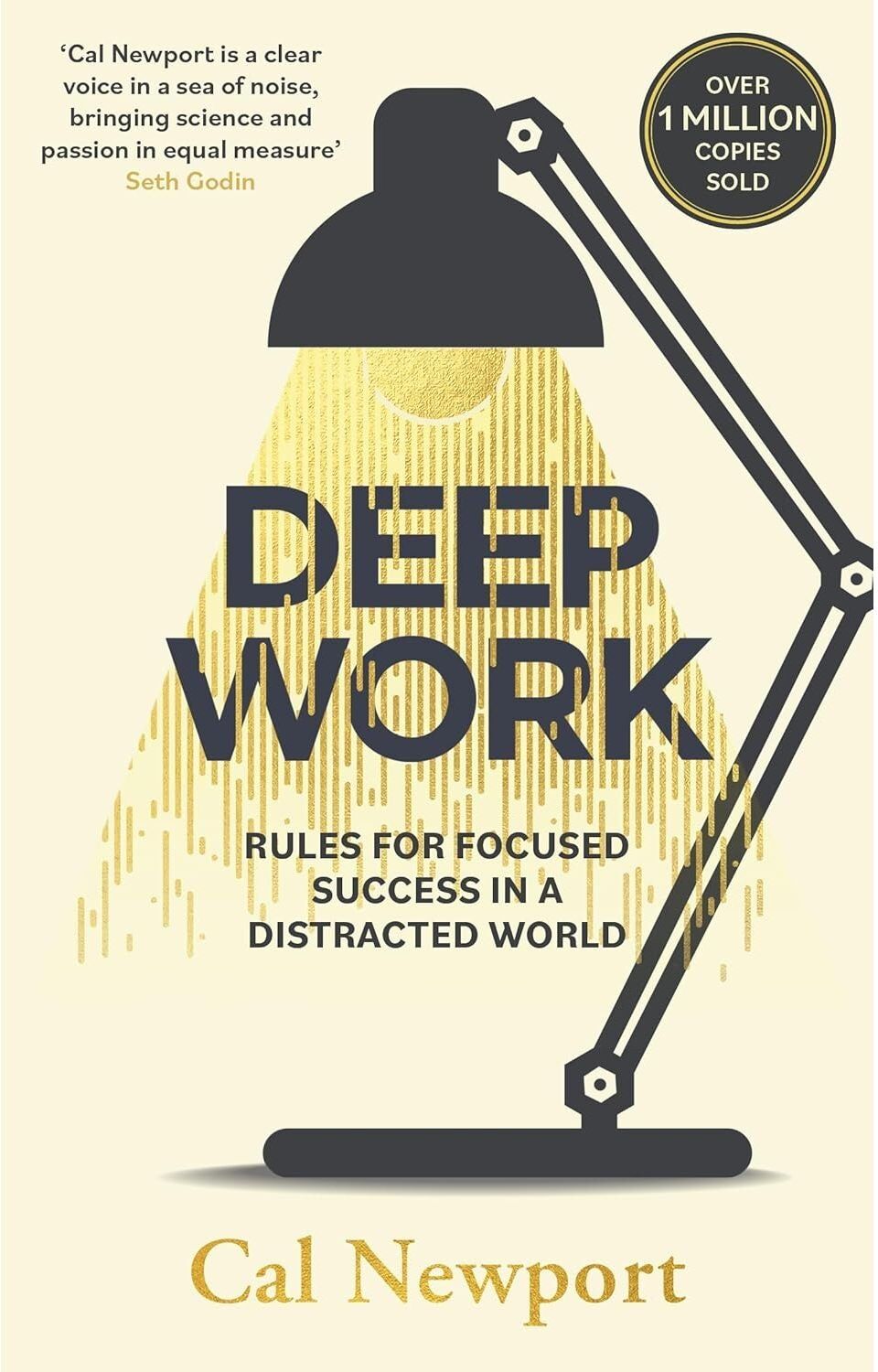
Piatkus Deep Work – Rules for Focused Success in a Distracted World by Cal Newport Productivity, Focus & Career Success BookIn a world full of distractions, the ability to focus deeply is becoming increasingly rare—and increasingly valuable. In Deep Work: Rules for Focused Success in a Distracted World, bestselling author and productivity expert Cal Newport explains why deep, concentrated work is the key to mastering complex skills, producing high-quality results, and standing out in your career. Drawing on neuroscience, psychology, and real-world examples, Newport shows how to eliminate distractions, train your focus, and work with intense concentration. The book combines compelling theory with practical strategies, helping readers build habits that support sustained attention and meaningful productivity in both professional and personal life. What You’ll Learn: Why deep work is essential for success in the modern economy How shallow work undermines productivity and focus Practical rules for building deep work habits Techniques to minimize distractions and digital overload How to produce better results in less time Perfect for professionals, students, creatives, and entrepreneurs, Deep Work is a must-read guide to achieving focus, efficiency, and long-term career success.7,99 £*Shipping: 2,99 £Secure redirect to the provider
-
Inspired Deals Battery Compatible Portable LED Work Light, 6000LM High Output 18V 20V Job Site Lighting Yellow Battery Compatible Portable LED Work Light, 6000LM High Output 18V 20V Job Site Lighting YellowStep out of the shadows and light up every task with our rugged portable cordless LED work light that transforms how you work and play. Designed for professionals, DIYers, and outdoor adventurers alike, this light delivers up to 6000LM of bright...59,97 $*Shipping: 0,00 $Secure redirect to the provider
-
Thorsons Ultralearning: Accelerate Your Career, Master Hard Skills and Outsmart the CompetitionFuture-proof your career and maximize your competitive advantage by learning the skill necessary to stay relevant, reinvent yourself, and adapt to whatever the workplace throws your way in this essential guide. Faced with tumultuous economic times and rapid technological change, staying ahead in your career depends on continual learning―a lifelong mastery of new ideas, subjects, and skills. If you want to accomplish more and stand apart from everyone else, you need to become an ultralearner. Scott Young incorporates the latest research about the most effective learning methods and the stories of other ultralearners like himself―among them Ben Franklin, Judit Polgar, and Richard Feynman, as well as a host of others, such as little-known modern polymaths like Nigel Richards who won the World Championship of French Scrabble―without knowing French. Young documents the methods he and others have used and shows that, far from being an obscure skill limited to aggressive autodidacts, ultralearning is a powerful tool anyone can use to improve their career, studies, and life. Ultralearning explores this fascinating subculture, shares the nine principles behind every successful ultralearning project, and offers insights into how you can organize and execute a plan to learn anything deeply and quickly, without teachers or budget-busting tuition costs. Whether the goal is to be fluent in a language (or ten languages), earn the equivalent of a college degree in a fraction of the time, or master multiple skills to build a product or business from the ground up, the principles in Ultralearning will guide you to success.8,99 £*Shipping: 2,99 £Secure redirect to the provider
-
What are irregular verbs and strong verbs?
Irregular verbs are verbs that do not follow the regular pattern of adding -ed to form their past tense and past participle. Instead, they have unique forms for these tenses. Strong verbs are a type of irregular verb that form their past tense and past participle by changing the vowel sound in the base form of the verb. These verbs often have a more complex and unpredictable pattern of inflection compared to regular and weak verbs. **
-
Can you please explain the difference between main verbs, auxiliary verbs, and modal verbs?
Main verbs are the primary verbs in a sentence that express the main action or state of being. Auxiliary verbs, also known as helping verbs, are used alongside main verbs to form different tenses, moods, or voices. Modal verbs are a type of auxiliary verb that express possibility, necessity, ability, or permission. They are used to modify the meaning of the main verb in a sentence. **
-
What are regular verbs in English and irregular verbs?
Regular verbs in English are verbs that follow a predictable pattern when forming their past tense and past participle forms. They simply add "-ed" to the base form of the verb to create the past tense and past participle forms. For example, "walk" becomes "walked" and "play" becomes "played." Irregular verbs, on the other hand, do not follow this pattern and have unique past tense and past participle forms that do not end in "-ed." For example, "go" becomes "went" and "eat" becomes "ate." These irregular forms must be memorized as they do not follow a consistent rule. **
-
Can Italian reflexive verbs be used as modal verbs?
No, Italian reflexive verbs cannot be used as modal verbs. Reflexive verbs in Italian indicate that the subject of the verb is also the recipient of the action. On the other hand, modal verbs in Italian express possibility, necessity, or ability. While both types of verbs are important in Italian grammar, they serve different functions and cannot be used interchangeably. **
Similar search terms for Verbs
-
Scribe UK Find a Job - #ENTRYLEVELBOSS - a 9-step guide for finding a job you likeFind a Job - Banging your head against the wall with the job search? #ENTRYLEVELBOSS will help you stop freaking out. Miserable in your current role but no idea what to do next? With this book you'll be able to make a decision, no personality tests required. Convinced that you are the most unhireable person on this planet? That's statistically improbable - and you'll be amazed at how employable you'll be by the time you have finished reading. This is personal training for your career, based on a step-by-step plan that includes: All the intel you need about getting hired in today's world, in today's industries, and with today's tools. Hyper-specific advice including templates for networking emails, CVs, and cover letters. Straight-to-the-point guidance about what not to do. A solid dose of humour and emotional support from someone who really has been there. The world of work has changed, and getting hired today for a job you actually want is going to take a lot more than a neatly typed cover letter and a well-pressed suit. But along with all the challenges of the new economy come unprecedented opportunities, and careers expert Alexa Shoen is here to unlock them for you.4,99 £*Shipping: 1,99 £Secure redirect to the provider
-
Wrendale Designs 'Sleeping on the Job' ChalkboardThe Wrendale Designs Sleeping on the Job Chalkboard is perfect for jotting down lists, notes or meal plans. Its charming border collie and rabbit design adds a playful touch, making it ideal for the kitchen or any space in your home. Featuring an easy-to-hang rope hanger and a ledge to keep a piece of chalk handy, this chalkboard combines functionality with style. Dimensions: 50 x 25cm.19,80 £*Shipping: 3,50 £Secure redirect to the provider
-
NYX Professional Makeup Jelly Job set for lipsNYX Professional Makeup Jelly Job, 2 pc, Cosmetic Sets for Women, Discover a practical bundle of products designed to enhance your everyday moments. NYX Professional MakeupJelly Job set takes the hassle out of choosing by offering a combination of popular products. Now available together in one convenient pack. The set contains: NYX Professional Makeup Jelly Job sparkle lip gloss with magnifying effect 7.50 ml NYX Professional Makeup Jelly Job sparkle lip gloss with magnifying effect 7.50 ml How to use: Follow the instructions on the package.16,60 £*Shipping: 3,99 £Secure redirect to the provider
-
Are verbs capitalized?
Verbs are not capitalized unless they are at the beginning of a sentence. In regular writing, verbs are typically written in lowercase letters. However, in titles or headings where all major words are capitalized, verbs may be capitalized as well. **
-
What are verbs?
Verbs are words that express action, occurrence, or state of being. They are an essential part of speech and are used to convey the action or state of the subject in a sentence. Verbs can be in different tenses, such as past, present, or future, and can also be modified to show aspects like continuous or perfect. In English, verbs are conjugated to match the subject and can also be used with auxiliary verbs to form different tenses and moods. **
-
How do perfect forms work with modal verbs?
Perfect forms work with modal verbs to express different shades of meaning. When a perfect form (such as "have" + past participle) is combined with a modal verb (such as "can," "could," "may," "might," "must," "shall," "should," "will," "would"), it indicates the completion or possibility of an action in the past, present, or future. For example, "I must have finished my homework" indicates a strong possibility that the action of finishing homework has been completed. Similarly, "She may have gone to the store" suggests the possibility that she went to the store. **
-
What is the difference between main verbs, auxiliary verbs, and modal verbs? Can you also give an example?
Main verbs are the primary verbs in a sentence that express the main action or state of being, such as "run," "eat," or "sleep." Auxiliary verbs, also known as helping verbs, are used in conjunction with main verbs to form different tenses, voices, or moods, such as "be," "have," or "do." Modal verbs are a type of auxiliary verb that express possibility, necessity, or ability, such as "can," "could," "must," or "should." For example, in the sentence "She is running," "is" is the auxiliary verb and "running" is the main verb. In the sentence "He can swim," "can" is the modal verb and "swim" is the main verb. **
* All prices are inclusive of VAT and, if applicable, plus shipping costs. The offer information is based on the details provided by the respective shop and is updated through automated processes. Real-time updates do not occur, so deviations can occur in individual cases. ** Note: Parts of this content were created by AI.