Buy jobclick.eu ?
We are moving the project
jobclick.eu .
Are you interested in purchasing the domain
jobclick.eu ?
domain@kv-gmbh.de · 0541-91531010
Buy jobclick.eu ?
What is the deontological perspective?
The deontological perspective is an ethical theory that focuses on the inherent rightness or wrongness of actions themselves, rather than the consequences of those actions. It is based on the idea that certain actions are morally obligatory regardless of their outcomes. Deontologists believe that individuals have a duty to follow certain moral rules or principles, such as honesty or respecting others' autonomy, regardless of the potential benefits or harms that may result. This perspective is often associated with philosophers like Immanuel Kant, who argued that moral principles are universal and apply to all rational beings. **
What is meant by deontological and teleological?
Deontological ethics is an ethical theory that focuses on the inherent rightness or wrongness of actions themselves, rather than the consequences of those actions. It emphasizes the importance of following moral rules and duties, regardless of the outcomes. On the other hand, teleological ethics, also known as consequentialism, is an ethical theory that evaluates the morality of actions based on their outcomes or consequences. It emphasizes the idea that the rightness or wrongness of an action is determined by the overall good or bad results it produces. In summary, deontological ethics focuses on the inherent nature of actions, while teleological ethics focuses on the outcomes of actions. **


Similar search terms for Deontological
Top-Angebote
Products related to Deontological:
-
Rupa Publications Your Job Is Not Your Personality by Ken Wallace - Paperback Career & Self-Help Book on Workplace Identity and SuccessYour Job Is Not Your Personality is a thought-provoking book that challenges the modern hustle mindset. Ken Wallace urges readers to stop measuring self-worth by job titles, late nights, or promotions. This book offers honest advice on winning at work without letting work define who you are. It's a refreshing read for professionals navigating burnout culture. Written by Ken Wallace and published by Rupa Publications, this paperback book is a bold look at the fine line between ambition and identity. It's a punchy career manifesto that draws attention to the traps that quietly hijack careers and wellbeing alike. Rather than another dry productivity guide, Wallace calls out the common pitfalls that can quietly derail careers and wellbeing.2,99 £*Shipping: 2,99 £Secure redirect to the provider
-
Inspired Deals Battery Compatible Portable LED Work Light, 6000LM High Output 18V 20V Job Site Lighting Yellow Battery Compatible Portable LED Work Light, 6000LM High Output 18V 20V Job Site Lighting YellowStep out of the shadows and light up every task with our rugged portable cordless LED work light that transforms how you work and play. Designed for professionals, DIYers, and outdoor adventurers alike, this light delivers up to 6000LM of bright...59,97 $*Shipping: 0,00 $Secure redirect to the provider
-
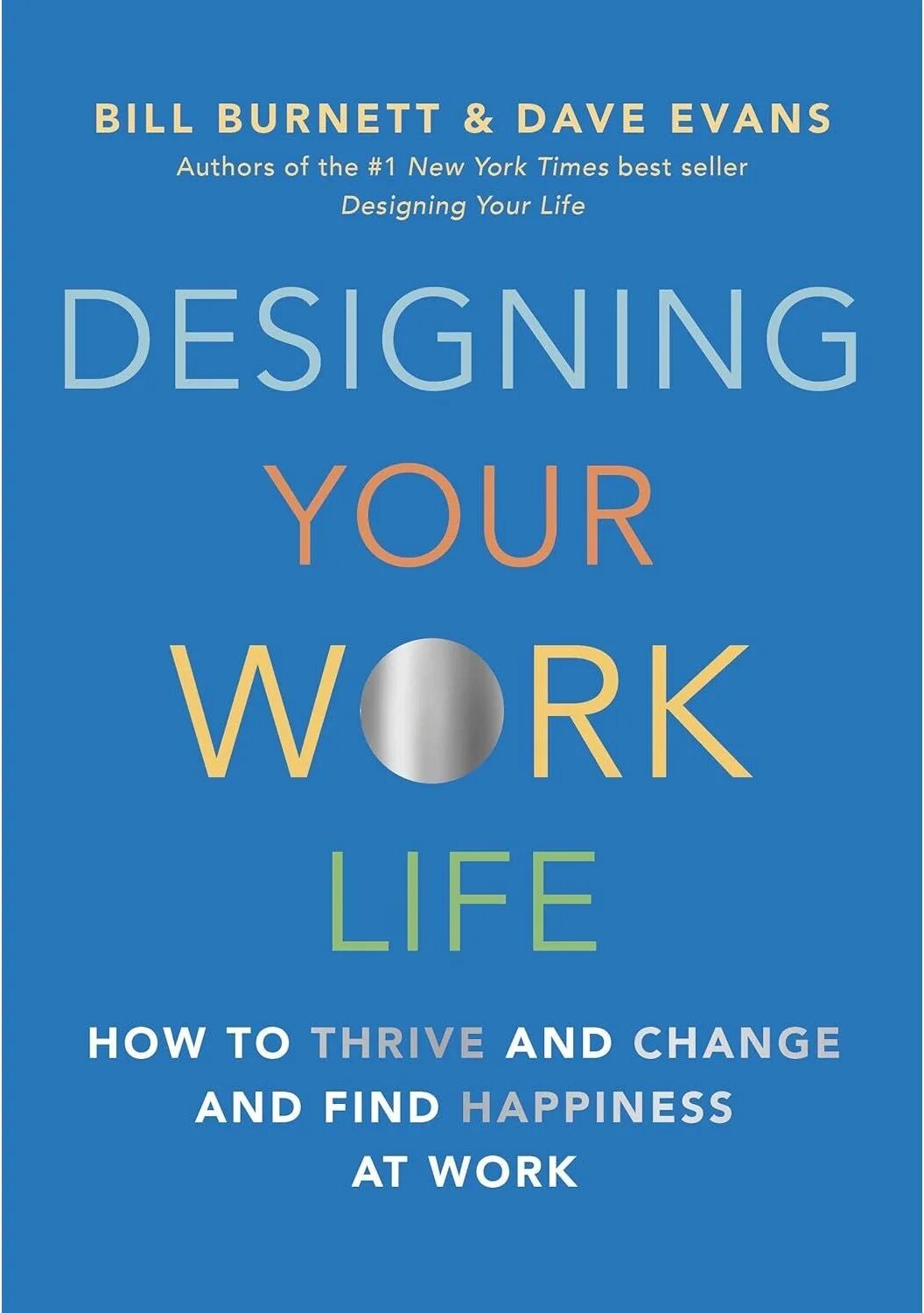
Knopf Designing Your Work Life by Bill Burnett & Dave Evans - Hardback - Career Self-Help Book Using Design Thinking to Build a Happier Work LifeDesigning Your Work Life by Bill Burnett and Dave Evans is a practical hardback that applies the design-thinking method to the workplace. The authors, both from Stanford University, show readers how to reframe unhelpful beliefs about their careers and build small, testable changes that lead to a job that feels genuinely meaningful. This book offers a clear framework for designing lasting career satisfaction, whether you want to reinvigorate a role you already hold or plan a bigger move. It's a follow-up to the bestselling Designing Your Life, which taught readers to treat their whole life as a design problem with workable, testable solutions. Burnett and Evans turn that same toolkit toward the workplace, helping you build a job that feels meaningful and satisfying.4,99 £*Shipping: 2,99 £Secure redirect to the provider
-
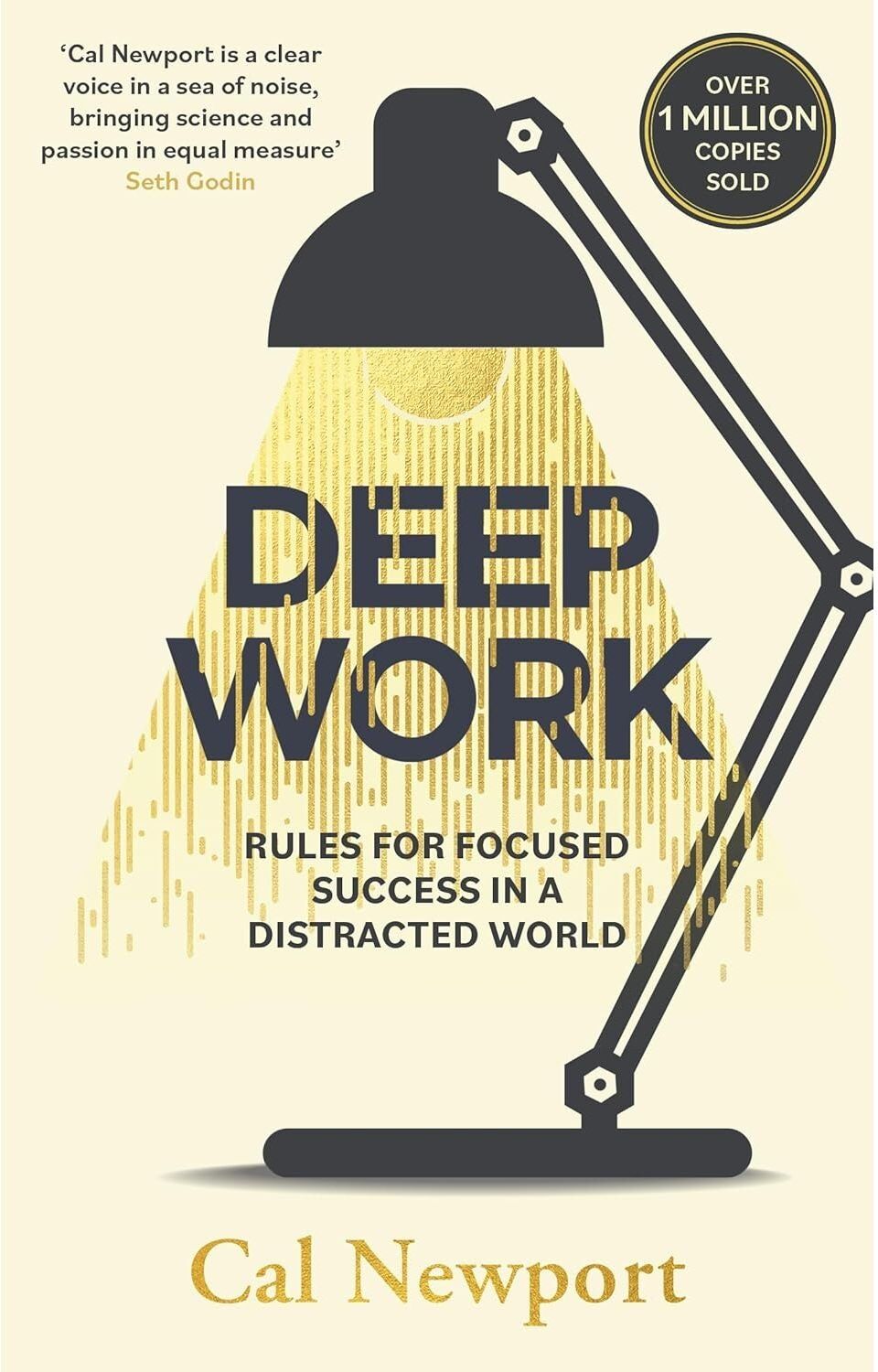
Piatkus Deep Work – Rules for Focused Success in a Distracted World by Cal Newport Productivity, Focus & Career Success BookIn a world full of distractions, the ability to focus deeply is becoming increasingly rare—and increasingly valuable. In Deep Work: Rules for Focused Success in a Distracted World, bestselling author and productivity expert Cal Newport explains why deep, concentrated work is the key to mastering complex skills, producing high-quality results, and standing out in your career. Drawing on neuroscience, psychology, and real-world examples, Newport shows how to eliminate distractions, train your focus, and work with intense concentration. The book combines compelling theory with practical strategies, helping readers build habits that support sustained attention and meaningful productivity in both professional and personal life. What You’ll Learn: Why deep work is essential for success in the modern economy How shallow work undermines productivity and focus Practical rules for building deep work habits Techniques to minimize distractions and digital overload How to produce better results in less time Perfect for professionals, students, creatives, and entrepreneurs, Deep Work is a must-read guide to achieving focus, efficiency, and long-term career success.7,99 £*Shipping: 2,99 £Secure redirect to the provider


-
Does Kant's deontological ethics contradict Aristotle's eudaemonistic ethics?
Kant's deontological ethics and Aristotle's eudaemonistic ethics have some fundamental differences, but they do not necessarily contradict each other. Kant's ethics focus on duty and the intention behind actions, while Aristotle's ethics emphasize achieving eudaimonia, or human flourishing, through virtuous actions. While Kant's emphasis on duty can sometimes conflict with Aristotle's emphasis on virtue, both ethical theories ultimately aim to guide individuals towards leading a good and moral life. Therefore, while they may approach ethics from different perspectives, they can be seen as complementary rather than contradictory. **
-
What is the difference between deontological ethics and utilitarianism?
Deontological ethics is an ethical theory that focuses on the inherent rightness or wrongness of actions themselves, regardless of their consequences. It emphasizes the importance of following moral rules and duties, such as telling the truth or keeping promises, regardless of the outcomes. On the other hand, utilitarianism is a consequentialist ethical theory that evaluates the morality of actions based on their outcomes. It prioritizes maximizing overall happiness or well-being for the greatest number of people, often through the calculation of benefits and harms. In summary, deontological ethics emphasizes the inherent morality of actions, while utilitarianism focuses on the consequences of actions. **
-
Does discourse ethics have a teleological or deontological approach?
Discourse ethics is primarily associated with a deontological approach. It focuses on the principles of communication and interaction between individuals, emphasizing the importance of ethical norms and rules in guiding discourse. The goal is to ensure that communication is based on mutual respect, equality, and rationality, rather than aiming towards a specific outcome or goal. By prioritizing the ethical principles of communication, discourse ethics aims to create a fair and just dialogue among participants. **
-
What are the differences between deontological ethics and utilitarian ethics?
Deontological ethics, also known as duty-based ethics, focuses on the inherent rightness or wrongness of actions themselves, regardless of their consequences. It emphasizes following moral rules and duties, such as telling the truth or keeping promises, based on principles like the categorical imperative. On the other hand, utilitarian ethics, also known as consequentialist ethics, prioritizes the outcomes or consequences of actions. It aims to maximize overall happiness or well-being for the greatest number of people, often through the calculation of benefits and harms. While deontological ethics emphasizes duty and rules, utilitarian ethics prioritizes the greatest good for the greatest number. **
Is deontological ethics exactly the same as the categorical imperative?
Deontological ethics is a broader ethical theory that states that actions are inherently right or wrong, regardless of their consequences. The categorical imperative, on the other hand, is a specific formulation within deontological ethics proposed by Immanuel Kant. While the categorical imperative is a key component of deontological ethics, deontological ethics encompasses a wider range of principles and theories beyond just the categorical imperative. **
What is the difference between deontological ethics and utilitarian ethics?
Deontological ethics, also known as duty-based ethics, focuses on the inherent rightness or wrongness of actions themselves, regardless of their consequences. This means that certain actions are considered morally right or wrong based on whether they adhere to a set of rules or principles. On the other hand, utilitarian ethics, also known as consequentialist ethics, evaluates the morality of actions based on their outcomes or consequences. In utilitarianism, the rightness or wrongness of an action is determined by its ability to produce the greatest overall happiness or pleasure for the greatest number of people. **
Top-Angebote
Products related to Deontological:
-
My F*cking Job Sucks: A Guided Workbook for When Your Job Is Driving You Crazy by Chartwell Books - Paperback Self-Help Career Wellness WorkbookA witty and no-nonsense guided workbook for anyone who has ever dreaded a Monday morning. Packed with candid prompts, quick quizzes, and simple meditations, it helps readers unpack exactly why their job is grinding them down and gives practical tools to reclaim their headspace. Written with humor and honesty, it's part journal, part therapy session, and entirely relatable for the modern worker stuck in a job that just isn't working for them anymore. The book tackles the emotional, physical, intellectual, and financial toll a bad job can take, covering more than 100 prompts to help readers take control of their work life. Published by Chartwell Books, this workbook is a candid and practical guide to navigating a difficult job situation.2,99 £*Shipping: 2,99 £Secure redirect to the provider
-
All Categories Goods LED Temporary Work Light Linkable Construction Job Site Lamp LED Temporary Work Light Linkable Construction Job Site LampLight up demanding spaces with a LED temporary work light built to keep every task clear, safe, and visible. This 60W hanging lamp is made for contractors, remodelers, workshop owners, and anyone who needs dependable temporary illumination. With...132,97 $*Shipping: 0,00 $Secure redirect to the provider
-
Rupa Publications Your Job Is Not Your Personality by Ken Wallace - Paperback Career & Self-Help Book on Workplace Identity and SuccessYour Job Is Not Your Personality is a thought-provoking book that challenges the modern hustle mindset. Ken Wallace urges readers to stop measuring self-worth by job titles, late nights, or promotions. This book offers honest advice on winning at work without letting work define who you are. It's a refreshing read for professionals navigating burnout culture. Written by Ken Wallace and published by Rupa Publications, this paperback book is a bold look at the fine line between ambition and identity. It's a punchy career manifesto that draws attention to the traps that quietly hijack careers and wellbeing alike. Rather than another dry productivity guide, Wallace calls out the common pitfalls that can quietly derail careers and wellbeing.2,99 £*Shipping: 2,99 £Secure redirect to the provider
-
Inspired Deals Battery Compatible Portable LED Work Light, 6000LM High Output 18V 20V Job Site Lighting Yellow Battery Compatible Portable LED Work Light, 6000LM High Output 18V 20V Job Site Lighting YellowStep out of the shadows and light up every task with our rugged portable cordless LED work light that transforms how you work and play. Designed for professionals, DIYers, and outdoor adventurers alike, this light delivers up to 6000LM of bright...59,97 $*Shipping: 0,00 $Secure redirect to the provider
-
What is the deontological perspective?
The deontological perspective is an ethical theory that focuses on the inherent rightness or wrongness of actions themselves, rather than the consequences of those actions. It is based on the idea that certain actions are morally obligatory regardless of their outcomes. Deontologists believe that individuals have a duty to follow certain moral rules or principles, such as honesty or respecting others' autonomy, regardless of the potential benefits or harms that may result. This perspective is often associated with philosophers like Immanuel Kant, who argued that moral principles are universal and apply to all rational beings. **
-
What is meant by deontological and teleological?
Deontological ethics is an ethical theory that focuses on the inherent rightness or wrongness of actions themselves, rather than the consequences of those actions. It emphasizes the importance of following moral rules and duties, regardless of the outcomes. On the other hand, teleological ethics, also known as consequentialism, is an ethical theory that evaluates the morality of actions based on their outcomes or consequences. It emphasizes the idea that the rightness or wrongness of an action is determined by the overall good or bad results it produces. In summary, deontological ethics focuses on the inherent nature of actions, while teleological ethics focuses on the outcomes of actions. **
-
Does Kant's deontological ethics contradict Aristotle's eudaemonistic ethics?
Kant's deontological ethics and Aristotle's eudaemonistic ethics have some fundamental differences, but they do not necessarily contradict each other. Kant's ethics focus on duty and the intention behind actions, while Aristotle's ethics emphasize achieving eudaimonia, or human flourishing, through virtuous actions. While Kant's emphasis on duty can sometimes conflict with Aristotle's emphasis on virtue, both ethical theories ultimately aim to guide individuals towards leading a good and moral life. Therefore, while they may approach ethics from different perspectives, they can be seen as complementary rather than contradictory. **
-
What is the difference between deontological ethics and utilitarianism?
Deontological ethics is an ethical theory that focuses on the inherent rightness or wrongness of actions themselves, regardless of their consequences. It emphasizes the importance of following moral rules and duties, such as telling the truth or keeping promises, regardless of the outcomes. On the other hand, utilitarianism is a consequentialist ethical theory that evaluates the morality of actions based on their outcomes. It prioritizes maximizing overall happiness or well-being for the greatest number of people, often through the calculation of benefits and harms. In summary, deontological ethics emphasizes the inherent morality of actions, while utilitarianism focuses on the consequences of actions. **
Similar search terms for Deontological
-
Knopf Designing Your Work Life by Bill Burnett & Dave Evans - Hardback - Career Self-Help Book Using Design Thinking to Build a Happier Work LifeDesigning Your Work Life by Bill Burnett and Dave Evans is a practical hardback that applies the design-thinking method to the workplace. The authors, both from Stanford University, show readers how to reframe unhelpful beliefs about their careers and build small, testable changes that lead to a job that feels genuinely meaningful. This book offers a clear framework for designing lasting career satisfaction, whether you want to reinvigorate a role you already hold or plan a bigger move. It's a follow-up to the bestselling Designing Your Life, which taught readers to treat their whole life as a design problem with workable, testable solutions. Burnett and Evans turn that same toolkit toward the workplace, helping you build a job that feels meaningful and satisfying.4,99 £*Shipping: 2,99 £Secure redirect to the provider
-
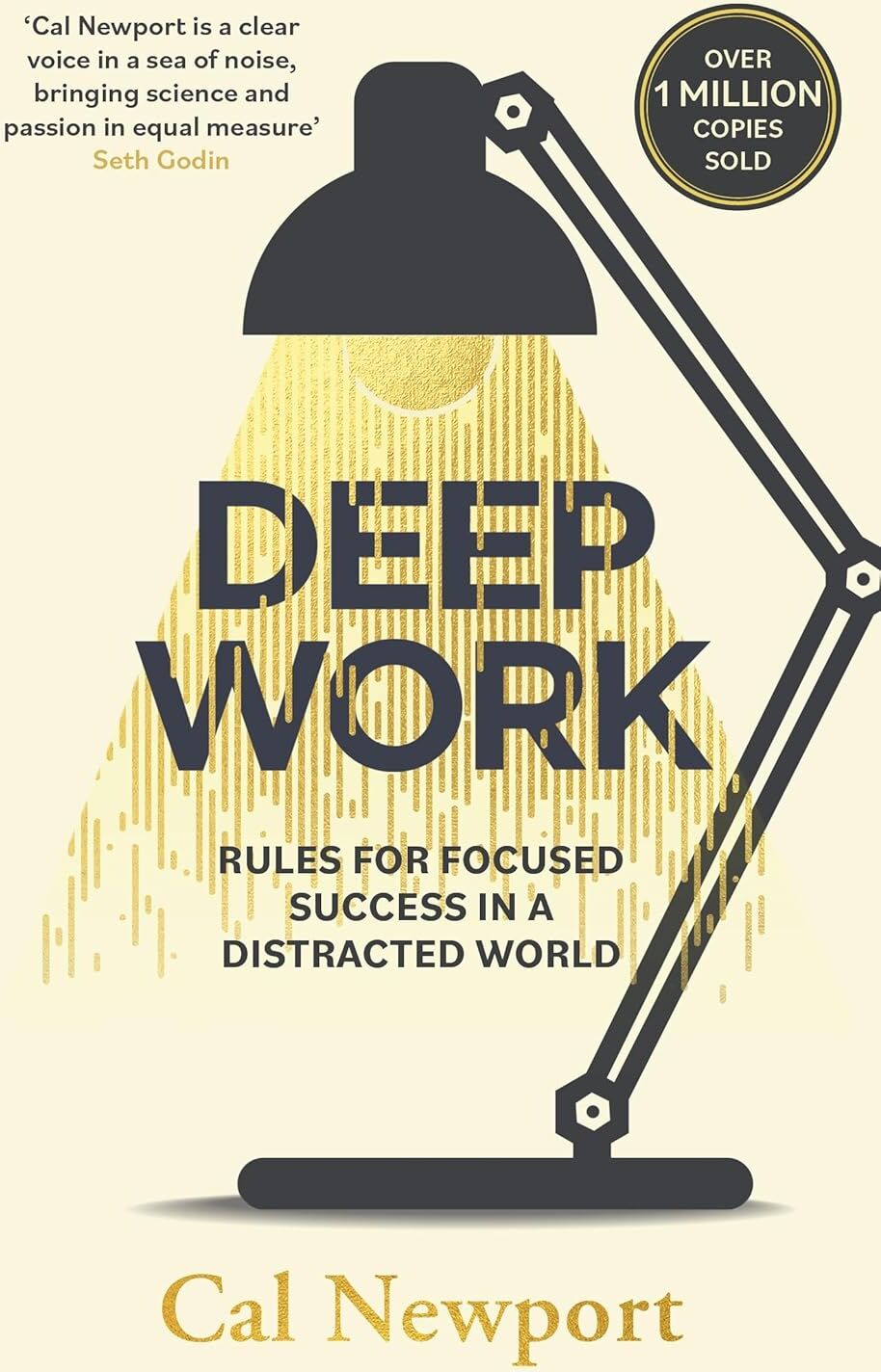
Piatkus Deep Work – Rules for Focused Success in a Distracted World by Cal Newport Productivity, Focus & Career Success BookIn a world full of distractions, the ability to focus deeply is becoming increasingly rare—and increasingly valuable. In Deep Work: Rules for Focused Success in a Distracted World, bestselling author and productivity expert Cal Newport explains why deep, concentrated work is the key to mastering complex skills, producing high-quality results, and standing out in your career. Drawing on neuroscience, psychology, and real-world examples, Newport shows how to eliminate distractions, train your focus, and work with intense concentration. The book combines compelling theory with practical strategies, helping readers build habits that support sustained attention and meaningful productivity in both professional and personal life. What You’ll Learn: Why deep work is essential for success in the modern economy How shallow work undermines productivity and focus Practical rules for building deep work habits Techniques to minimize distractions and digital overload How to produce better results in less time Perfect for professionals, students, creatives, and entrepreneurs, Deep Work is a must-read guide to achieving focus, efficiency, and long-term career success.7,99 £*Shipping: 2,99 £Secure redirect to the provider
-
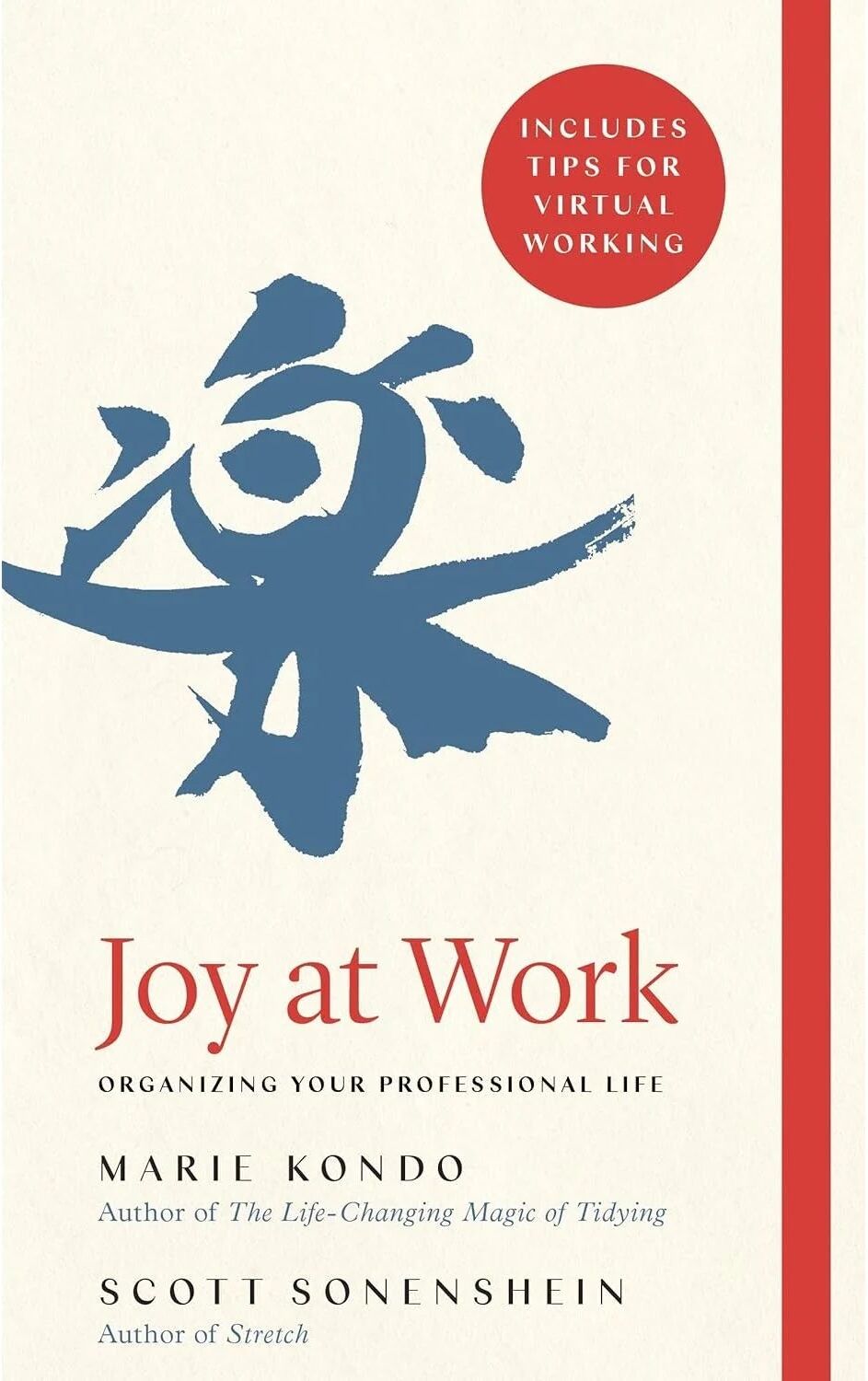
Pan Macmillan Joy at Work by Marie Kondo & Scott Sonenshein - Paperback - Non Fiction Self-Help - Organize Your Desk, Inbox & CareerDiscover the principles of the KonMari method applied to the workplace in this paperback edition of Joy at Work. Co-written with organizational psychologist Scott Sonenshein, Marie Kondo helps busy professionals cut through clutter and rediscover focus. This book blends practical decluttering steps with behavioural science to create a calmer, more productive working life, whether in an office, at home, or hybrid. In Joy at Work, Marie Kondo and Scott Sonenshein extend the KonMari method beyond the home, guiding readers through deciding what truly sparks joy in their work and how to create a more organized and efficient workspace. Published by Pan Macmillan (Bluebird), this book is suitable for adult readers.7,99 £*Shipping: 2,99 £Secure redirect to the provider
-
Piatkus Cal Newport 2 Books Collection Set - Deep Work & So Good They Can't Ignore You - Paperback - Bestselling Career & Productivity BooksThis Cal Newport 2 Books Collection Set brings together two influential career and productivity titles. Deep Work reveals how to master intense, distraction-free concentration, while So Good They Can't Ignore You dismantles the 'follow your passion' myth in favor of building rare, valuable skills. These bestselling paperbacks form an essential toolkit for anyone wanting to work smarter, focus harder, and build a career they genuinely love. The books are in brand new condition, published by Piatkus, and are available in paperback format.14,99 £*Shipping: 2,99 £Secure redirect to the provider
-
Does discourse ethics have a teleological or deontological approach?
Discourse ethics is primarily associated with a deontological approach. It focuses on the principles of communication and interaction between individuals, emphasizing the importance of ethical norms and rules in guiding discourse. The goal is to ensure that communication is based on mutual respect, equality, and rationality, rather than aiming towards a specific outcome or goal. By prioritizing the ethical principles of communication, discourse ethics aims to create a fair and just dialogue among participants. **
-
What are the differences between deontological ethics and utilitarian ethics?
Deontological ethics, also known as duty-based ethics, focuses on the inherent rightness or wrongness of actions themselves, regardless of their consequences. It emphasizes following moral rules and duties, such as telling the truth or keeping promises, based on principles like the categorical imperative. On the other hand, utilitarian ethics, also known as consequentialist ethics, prioritizes the outcomes or consequences of actions. It aims to maximize overall happiness or well-being for the greatest number of people, often through the calculation of benefits and harms. While deontological ethics emphasizes duty and rules, utilitarian ethics prioritizes the greatest good for the greatest number. **
-
Is deontological ethics exactly the same as the categorical imperative?
Deontological ethics is a broader ethical theory that states that actions are inherently right or wrong, regardless of their consequences. The categorical imperative, on the other hand, is a specific formulation within deontological ethics proposed by Immanuel Kant. While the categorical imperative is a key component of deontological ethics, deontological ethics encompasses a wider range of principles and theories beyond just the categorical imperative. **
-
What is the difference between deontological ethics and utilitarian ethics?
Deontological ethics, also known as duty-based ethics, focuses on the inherent rightness or wrongness of actions themselves, regardless of their consequences. This means that certain actions are considered morally right or wrong based on whether they adhere to a set of rules or principles. On the other hand, utilitarian ethics, also known as consequentialist ethics, evaluates the morality of actions based on their outcomes or consequences. In utilitarianism, the rightness or wrongness of an action is determined by its ability to produce the greatest overall happiness or pleasure for the greatest number of people. **
* All prices are inclusive of VAT and, if applicable, plus shipping costs. The offer information is based on the details provided by the respective shop and is updated through automated processes. Real-time updates do not occur, so deviations can occur in individual cases. ** Note: Parts of this content were created by AI.